
NGC6888
Every year the Vorarlberger Amateur Astronomen have a night of stargazing and Astrophotography at the Panoramagasthof Kristberg, in 2025 the weather was especially fine and I was able to capture a variety of deep sky objects


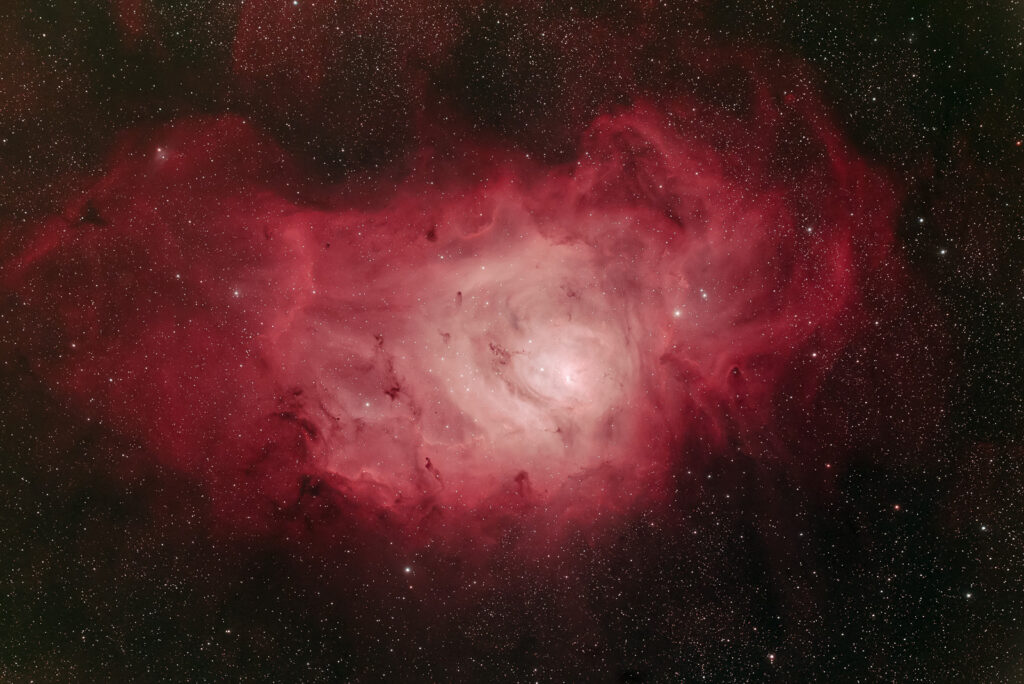
A short exposure of the lagoon nebula in the constellation Sagittarius.

Since about 30 years ago, when an astronomy club colleague showed me M104 the sombrero galaxy in a 20×60 binocular it was one of my favourite deep sky objects.
A night after the great Aurora Display of 2024 I joined a friend who was imaging the Leo triplet, and had a go at M104 using the Starfire 127mm on the G-11 mount. We had a fun evening, saw some faint meteors, watched the milky way slowly rising.
The giant sunspot had been producing strong x-ray flares and produced a number of coronal mass ejections, so I had decided to bring the refractor out and take a whole disc picture of the sun using the Nikon D750 and a 2x times converter.


Sunspot AR3664 Astrophysics 127mm f/8, 2x converter, Nikon D750a
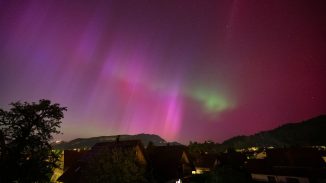
After experiencing the 2001 and 2003 (more) aurora displays, I was always on alert when larger CMEs (Coronal masse ejections) were heading towards earth, but in the last 21 years I was not able to see another Aurora display at home. So I got pretty excited when huge sunspot AR 3664 sent some CMEs toward earth. When checking the aurora forecast in the afternoon, mid-latitude Auroras were deemed extremely likely, so I packed up some cameras and headed to a place with a good view towards the north.
Read More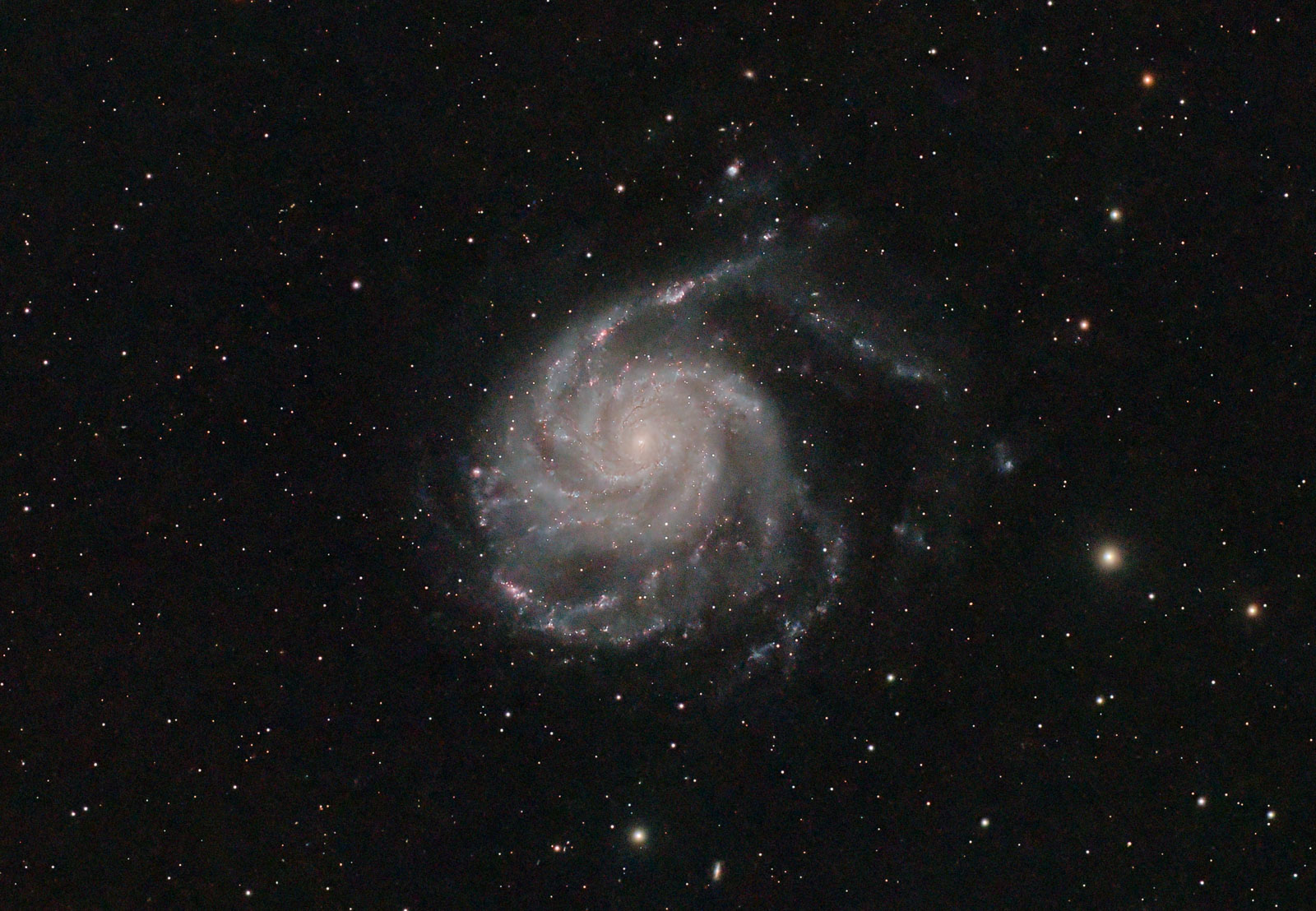
M101 is a slightly disturbed spiral galaxy we see face on, it is located in the constellation Ursa Major, the big bear. This is the first image I have taken since I updated the G-11 mount with the rectascension extension, which also allows separating the RA and DEC units for portability. I also switched out the original tripod for a Meade Field tripod, which is lighter and packs smaller.
Read More
The partial solar eclipse on October 25th happened conveniently during lunch break, and the skies were perfectly clear. I opted for the big refractor (Astro-Physics 127mm f/8) combined with a 2x Nikon teleconverter in the hope to capture some detail in the form of sunspots on the solar disc.
I setup the camera to record a set of timelapse images, taking a picture every 20s. After I while I also setup the 60mm refractor to be able to observe the eclipse visually.
Shortly after maximum eclipse I noticed an airplane with contrail heading to the area of the sky where the sun was located. From past experience I thought that it will miss the sun (the apparent diameter of the sund and moon in the sky is only about half a thumb’s width at arm-length), but switched the camera to video and started recording.
Read More