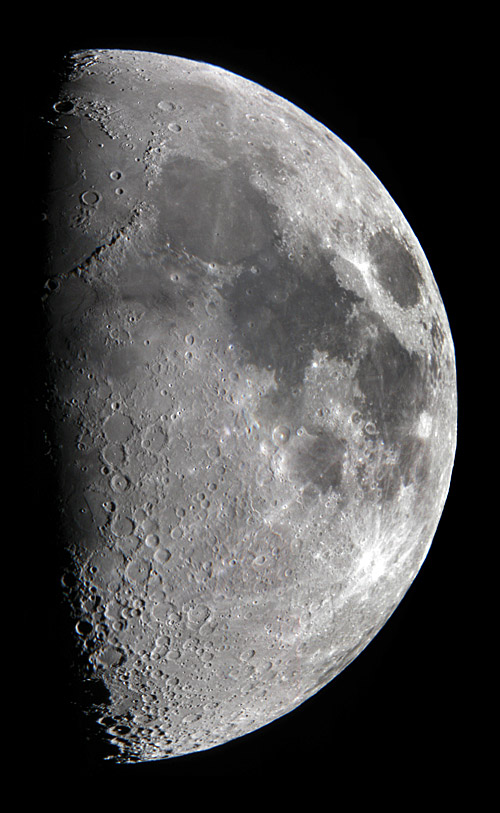
A 2x barlow lens and a right angle prism were used to increase the effective focal length. The resulting focal length was about 2000mm.
For each image, about 200pictures were processed using the Registax software.
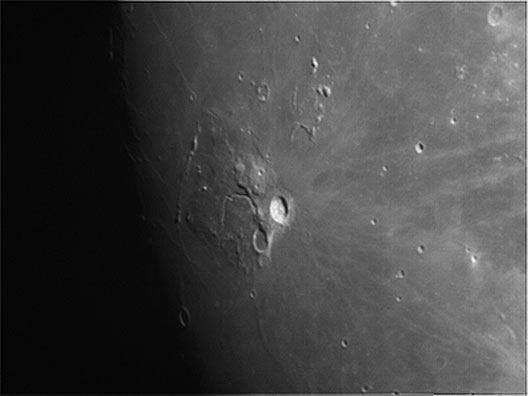
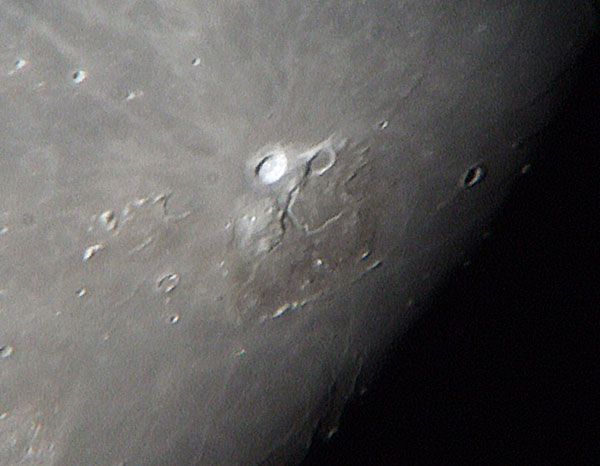
Aristarchus is the very bright crater near the center of above image. You can see the winding Schröter Valley next to it.
Around the valley is a slightly brown colored area, called the Aristarchus Plateau.
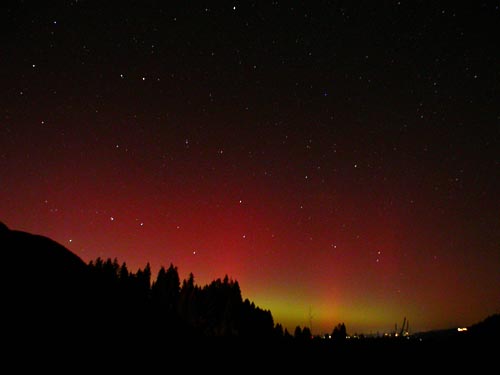
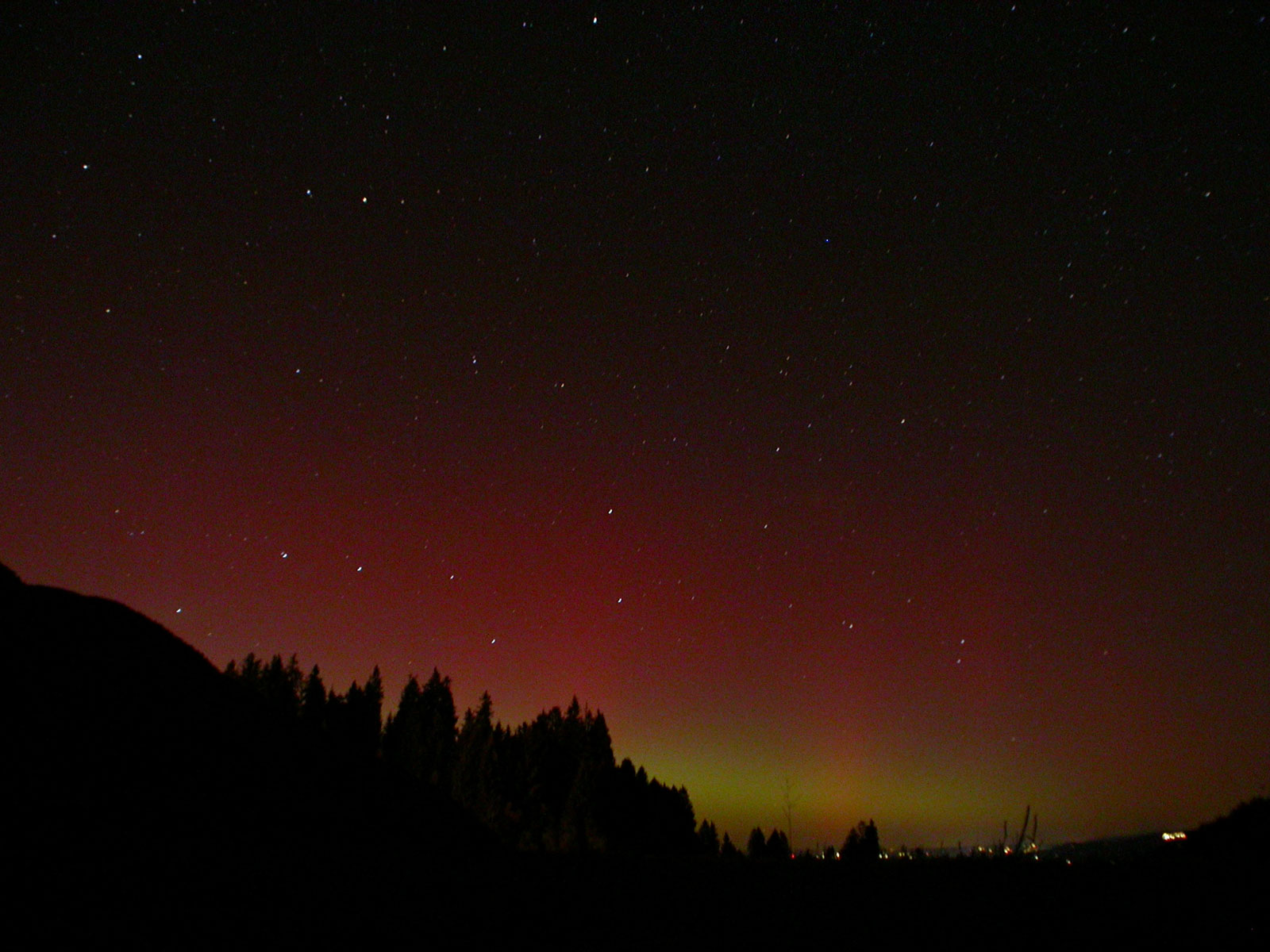
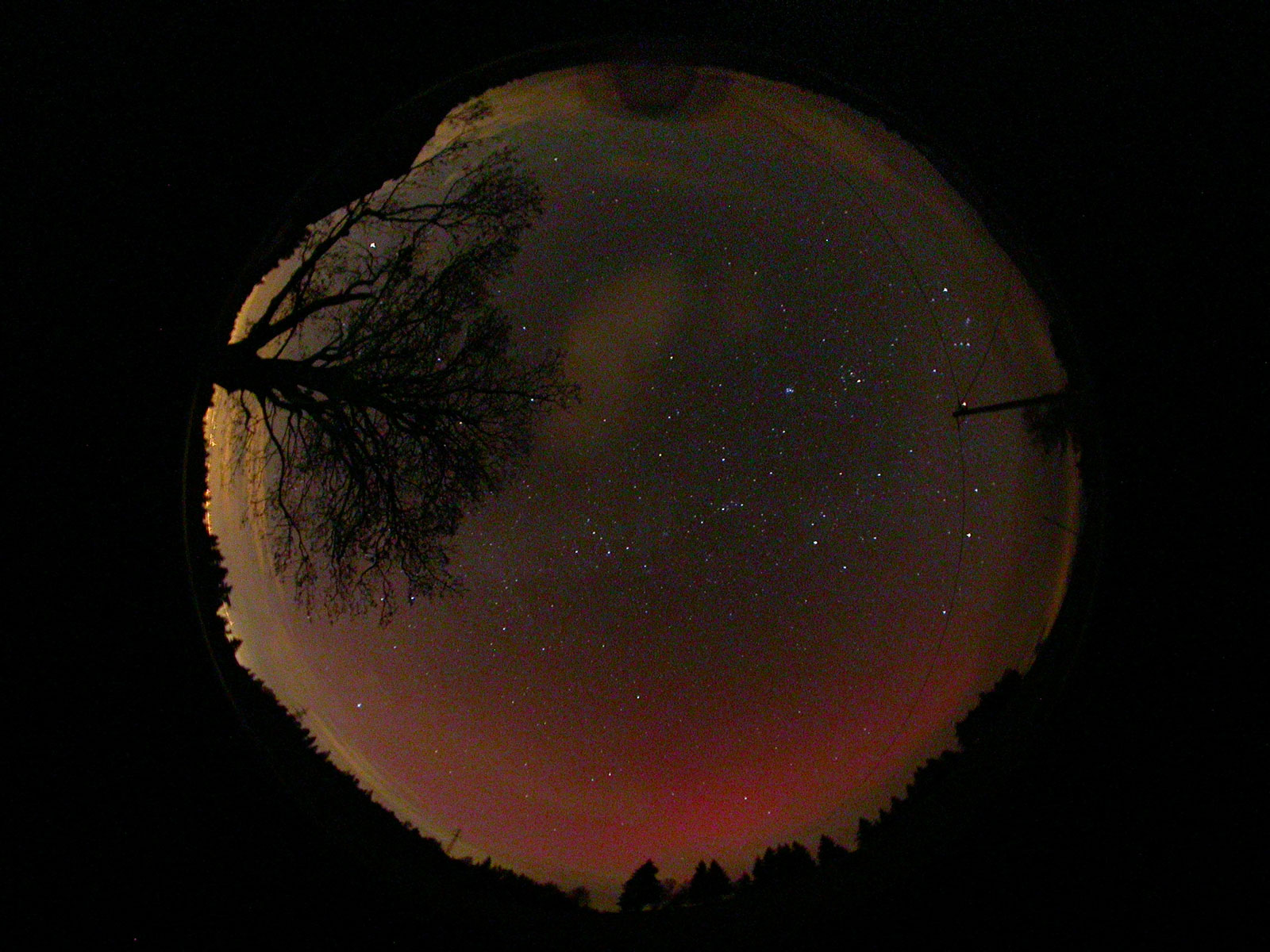
After a very nice display the day before, another solar eruption triggered an even more impressive display
All images were taken with a Coolpix 4500 camera, either with the wide-angle converter, or the fisheye converter.
Here are some images.
Nikon Coolpix 4500, 32sec, ISO4200, Wide angle converter, NR off
Nikon Coolpix 4500, 60sec, ISO400, Fish Eye converter, NR on Read More

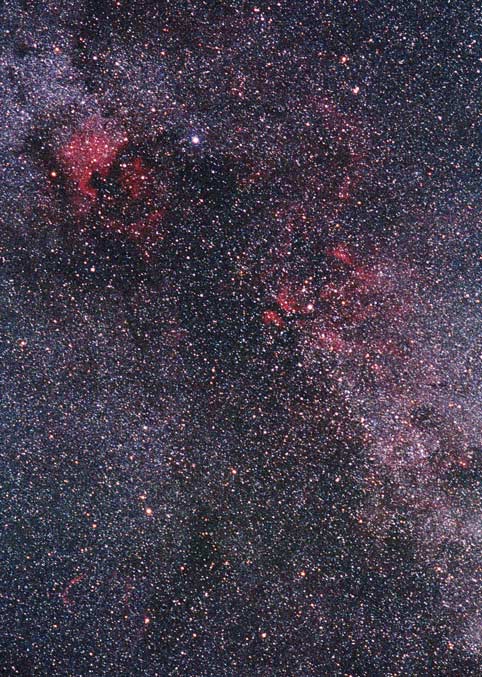
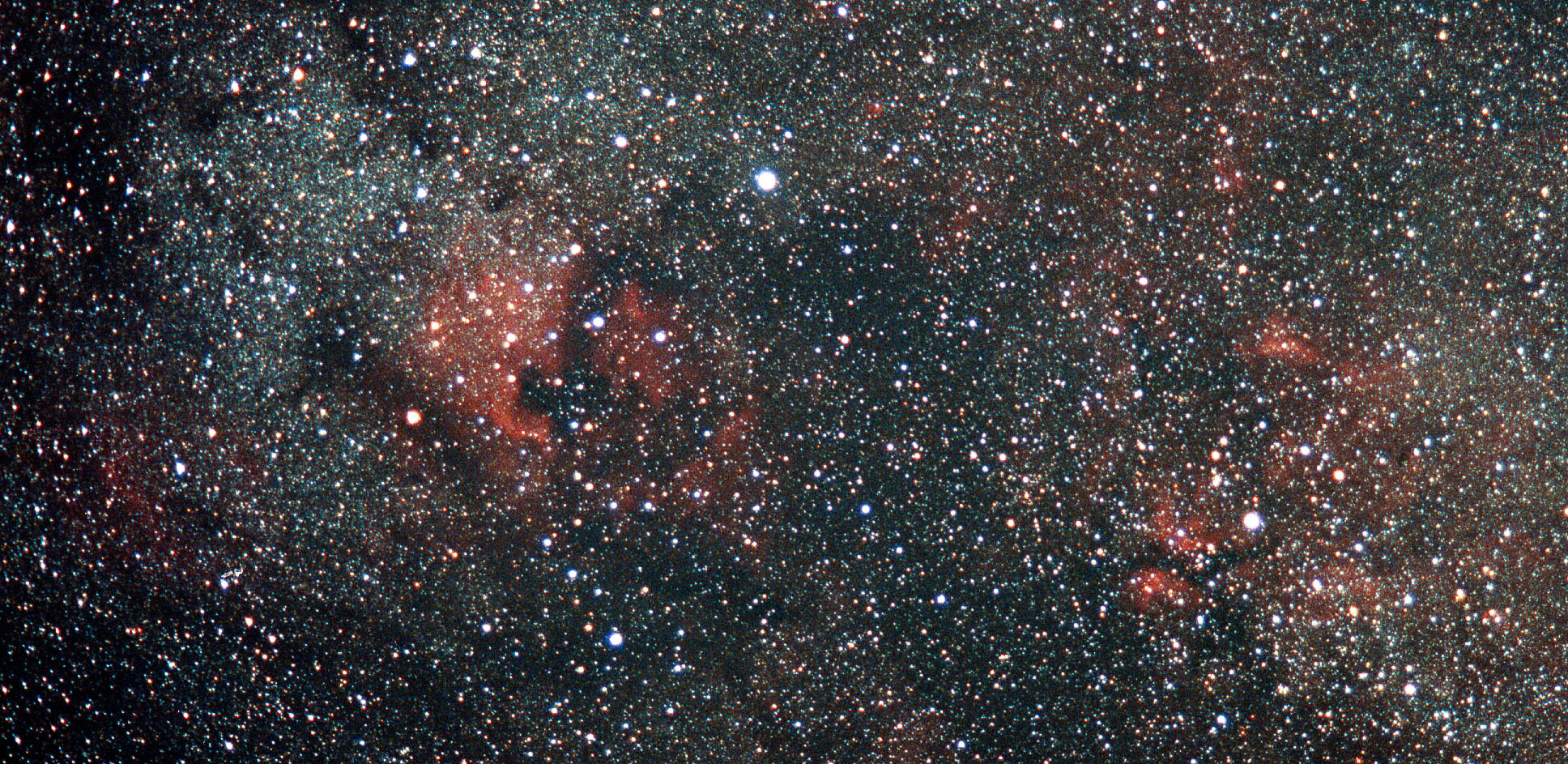
While imaging Mars with our Club´s 10″ LX200, I piggybacked the Nikon on my 130mm Vixen Newtonian and took this shot of the Constellation Cygnus.

The Rosette nebula (NGC2237-9) surrounds the open cluster NGC2244 in Monoceros. According to Burnham´s Celestial Handbook it is located at a distance of about 2600 lightyears and has a diameter of about 55 lightyears. Read More