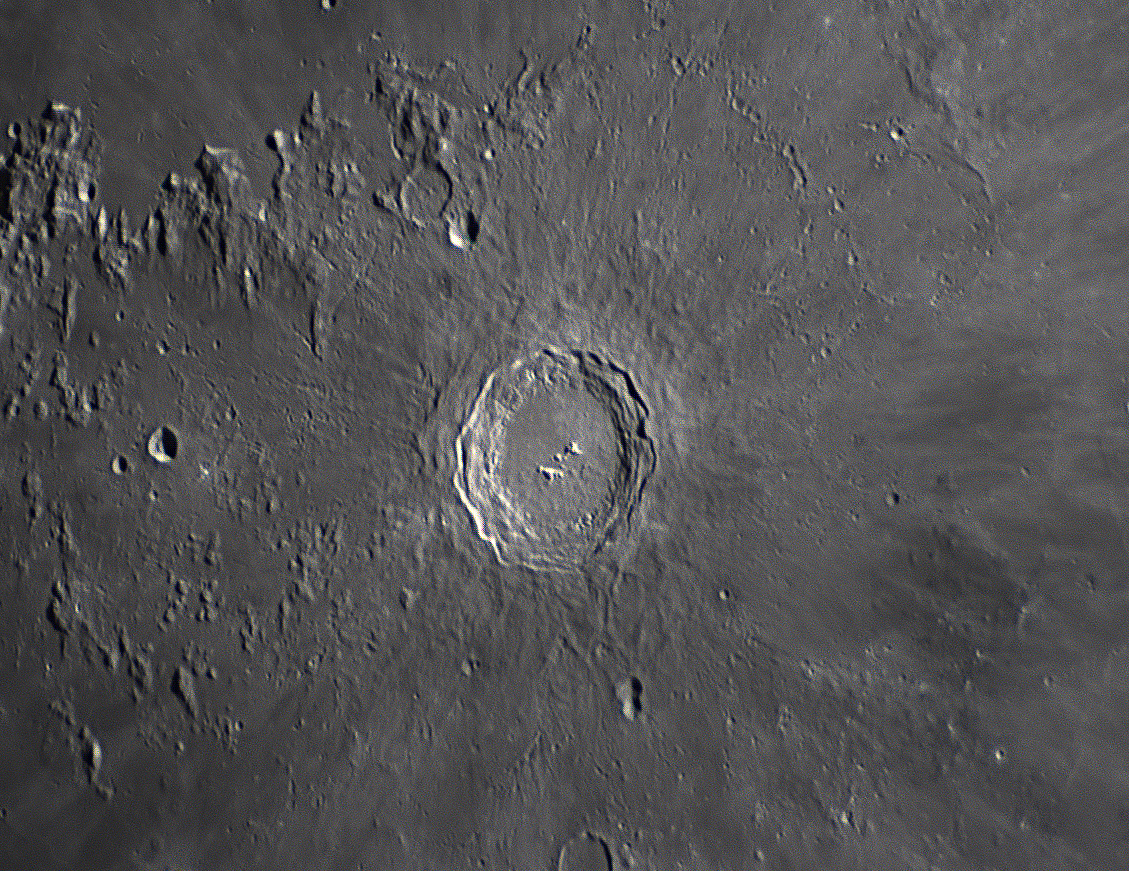
Crater Copernicus, 200mm GSO Newton f/5, QH5IIc camera, Televue 3x Barlow lens.
Crater Copernicus, 200mm GSO Newton f/5, QH5IIc camera, Televue 3x Barlow lens.
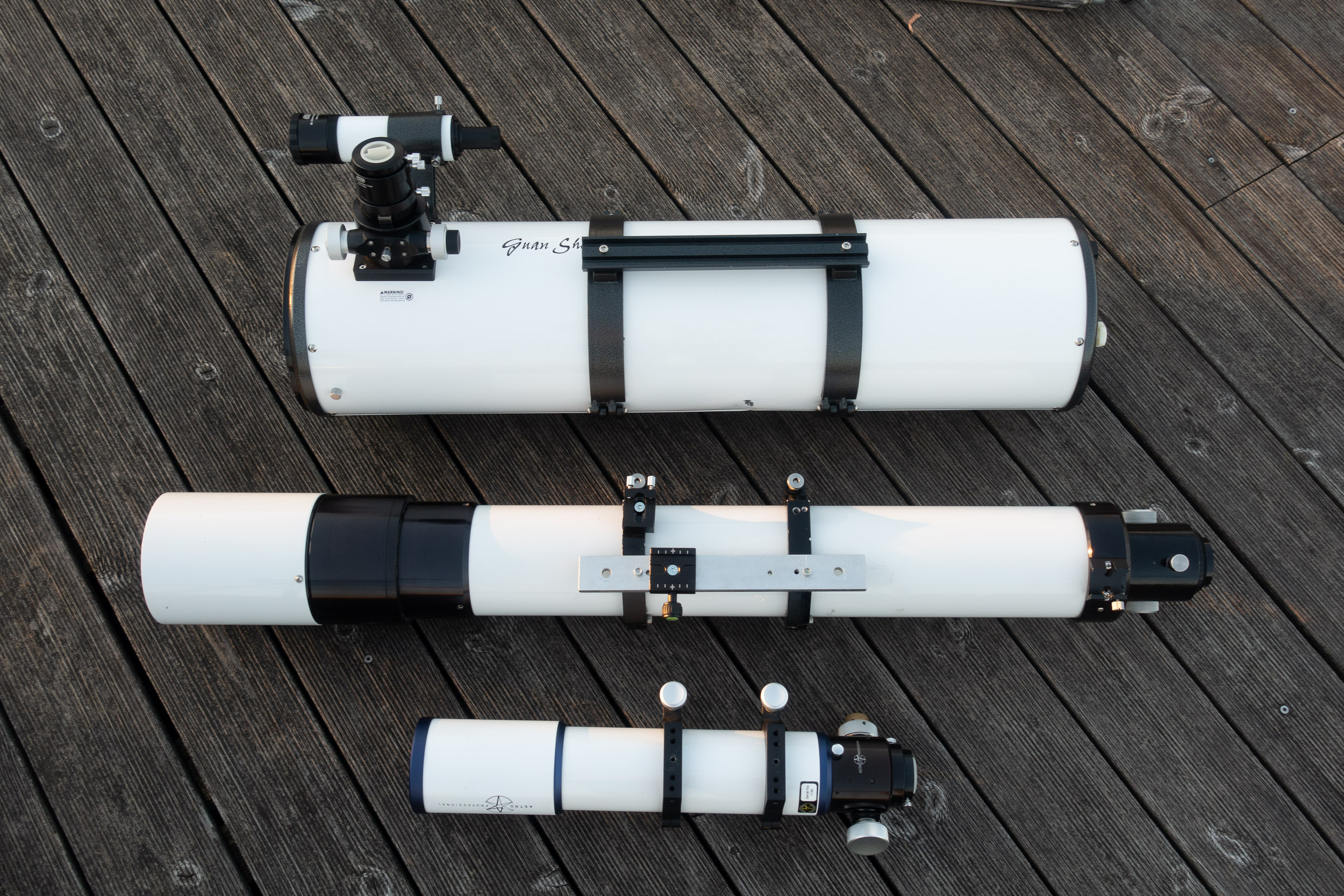
Last night I photographed the same lunar regions through 3 different telescopes:
Today I pointed the 20cm Newtonian telescope again towards the moon. Shortly after first quarter quite a few nice landscapes are visible.
All images were captured as 120s AVI files using a 3x Barlow lens and the QHY5IIc camera.
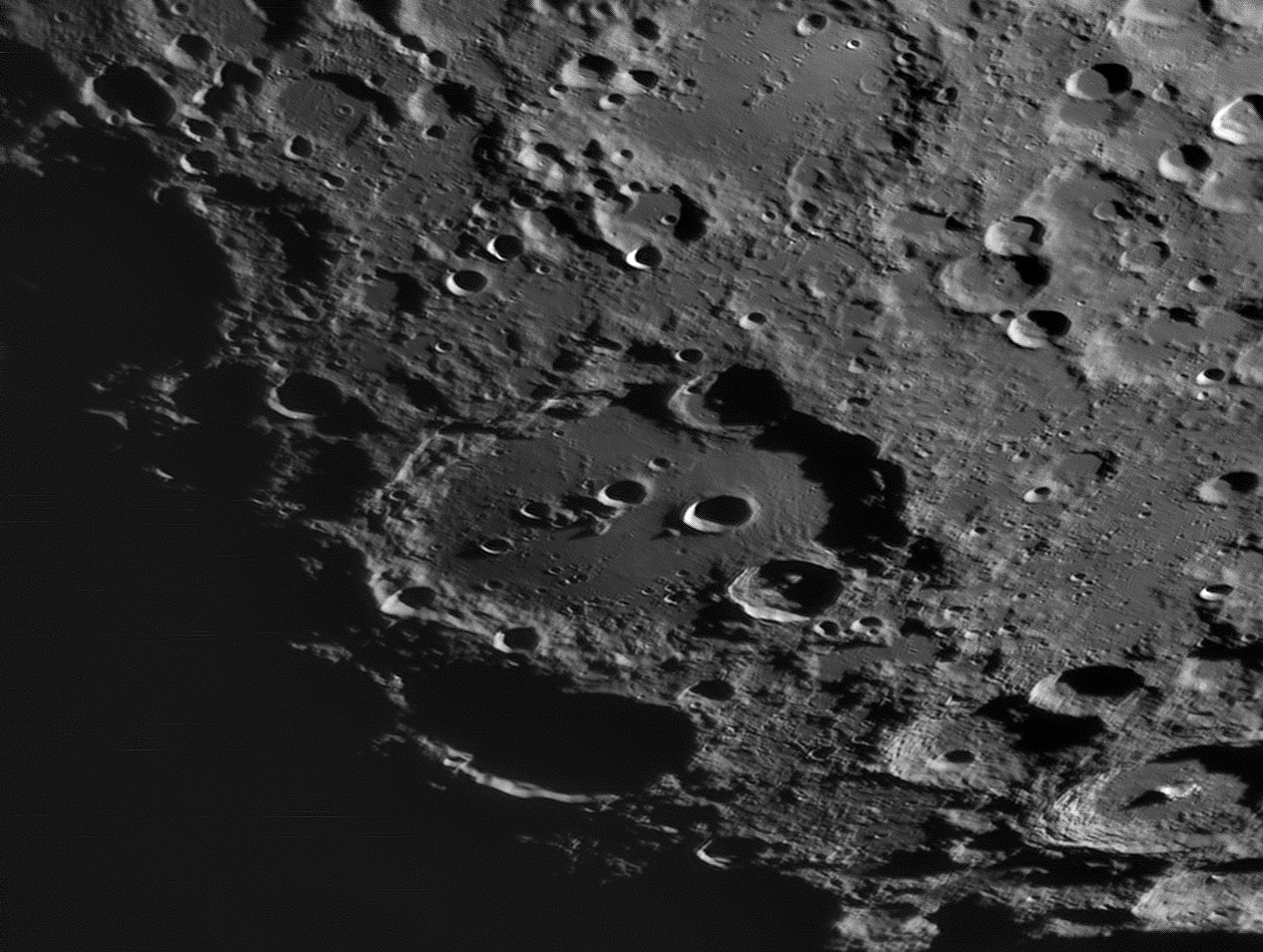
Crater Clavius

The 20cm Newtonian telescope in combination with the Televue 3x Barlow show a wealth of detail on the moon.
I haven’t photographed the moon at this age, so here are some new lunar features for me. Read More
As the ISS orbits our planet, from time to time it passes in front of the sun for a given location.
https://www.calsky.com and https://transit-finder.com/ allow you to predict such transits for your location.
Last Saturday such a transit happened, and I was able to capture it:
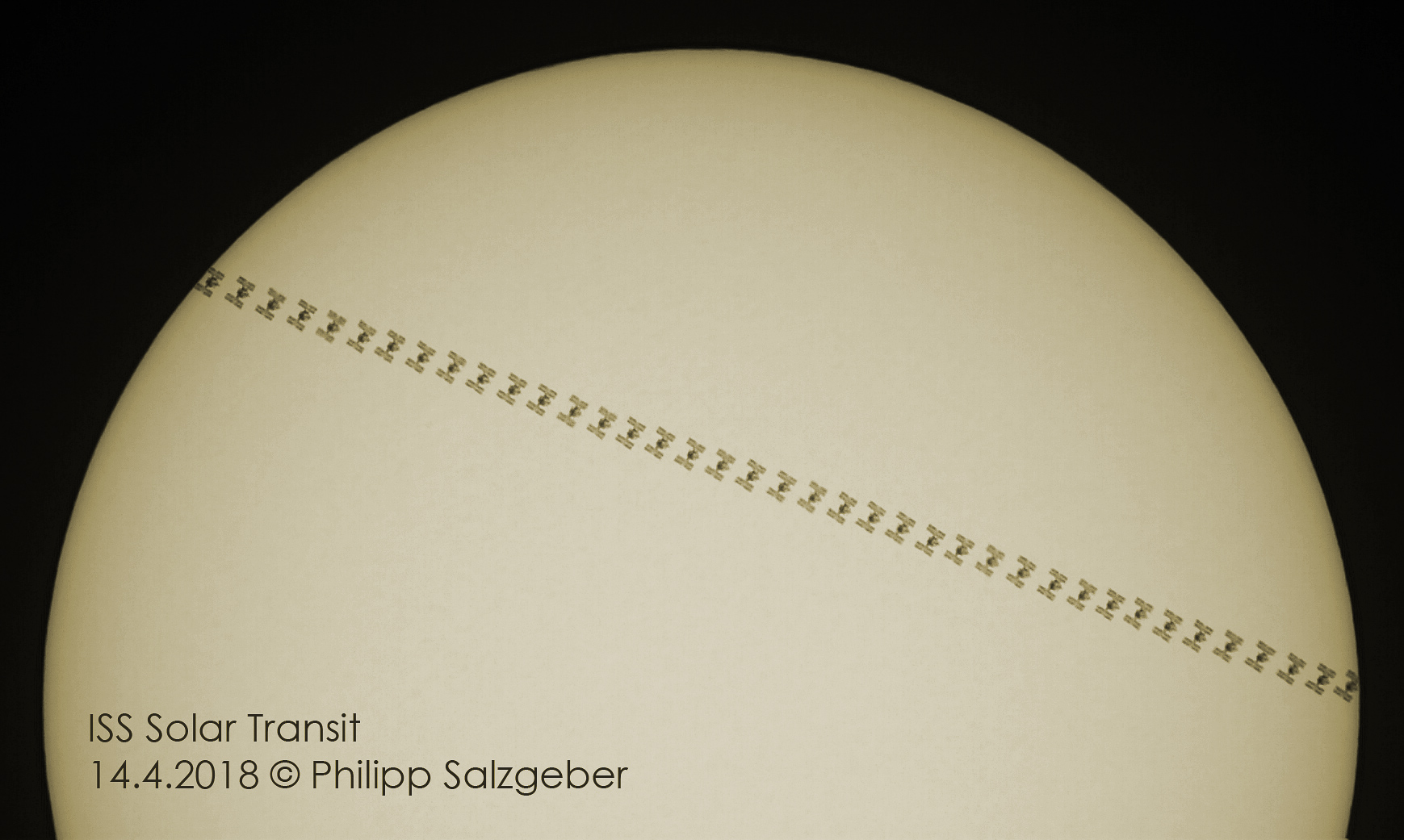
A combination of all frames that captured the ISS.
Springtime is galaxy time! After a frustrating friday night with incorrect mount setup, iAstroHub not working properly, which resulted in badly focussed and guided images, saturday evening proved much more successful:
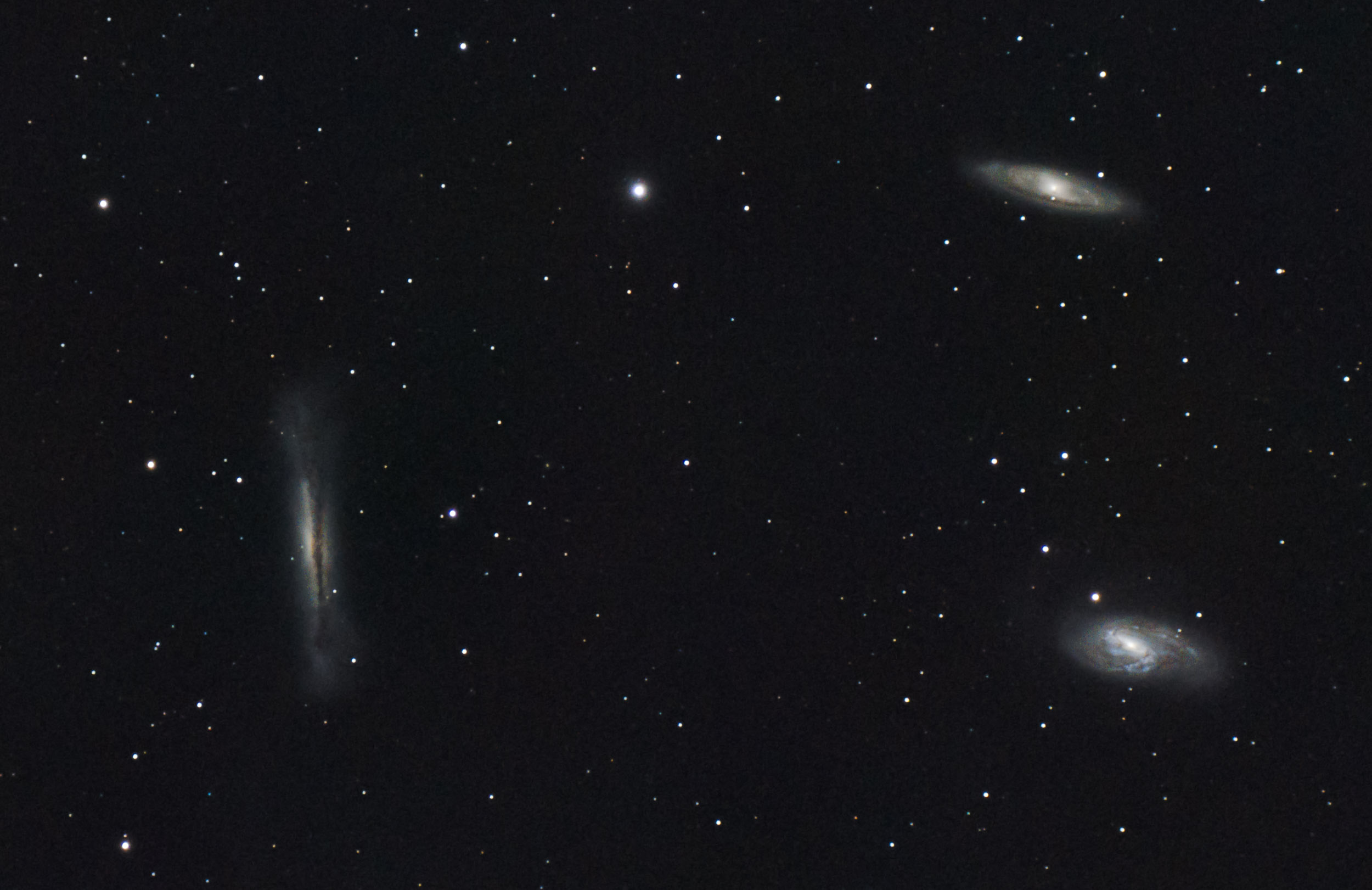
Leo Triplet, M65, M65 and NGC3628, 25x120s, Astro-Physics 127mm f/8, Nikon D750, BackyardNikon, PHD2, Regim, Photoshop, Lightroom
The Leo triplet is a trio of galaxies which are physically near each other, a faint tidal tail can be seen to the upper left of M66, the lower right galaxy.
The distance to this galaxy group is about 35 million lightyears.
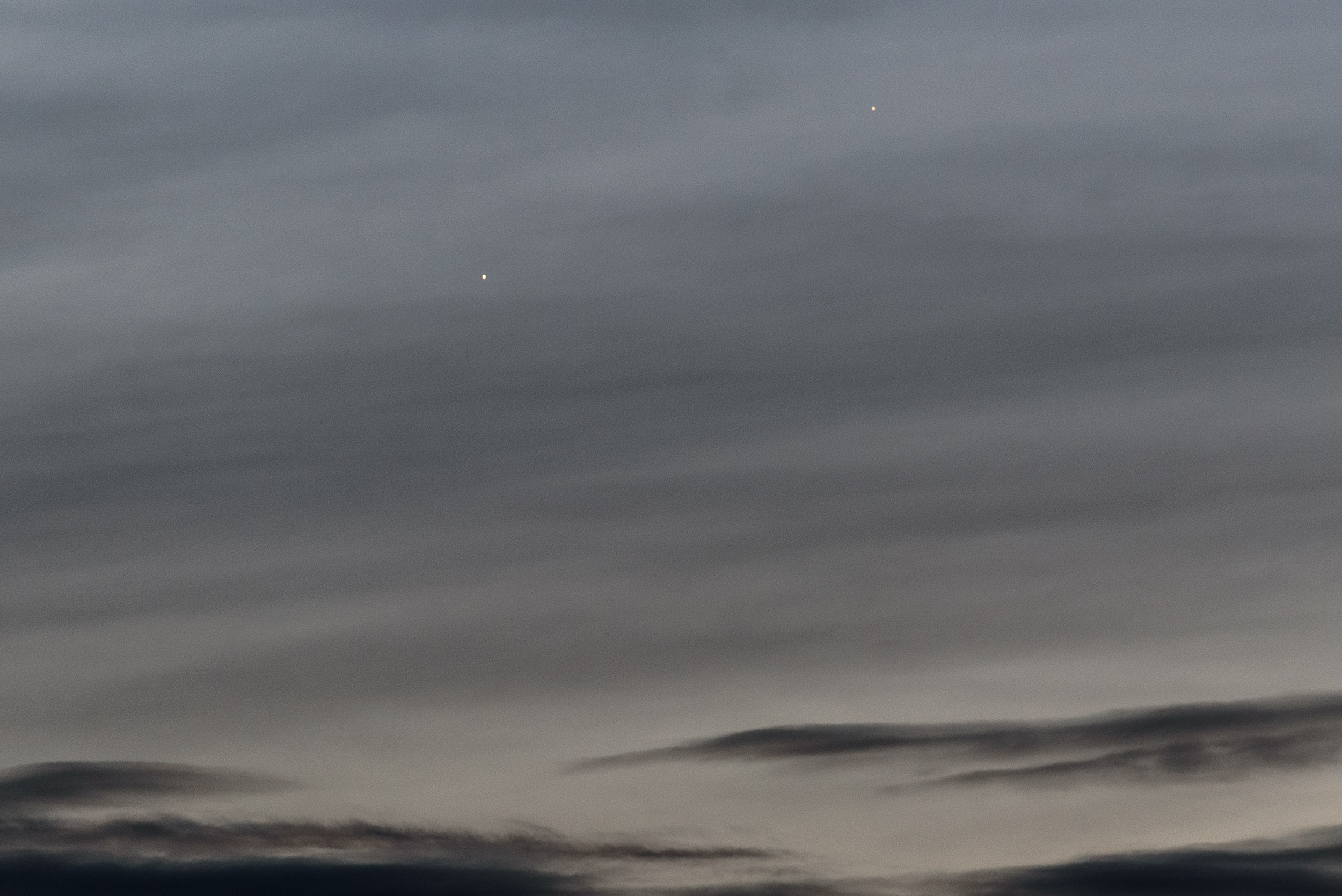
Venus and Mercury conjunction in a hazy sky. Image taken with 300mm lens at f/5.6, 1/25s, ISO 400, cropped.
In Autumn the Andromeda galaxy is conveniently placed in the darkes part of the sky for my home, the eastern sky.
Due to the vibration prone location of my telescope on the top of our house, I had to throw away 2/3rds of the individual exposures due to trailed stars, so I ended up with only 22,5 minutes of data. Another possibility is, that the guiding didn’t work properly, calibration was suspiciously short.
Anyways, here is the Andromeda galaxy at 1016mm focal length, Nikon D750, 45x30s, ISO 1600, Astro-Physics 127mm f/8, Meade LXD 650 mount.
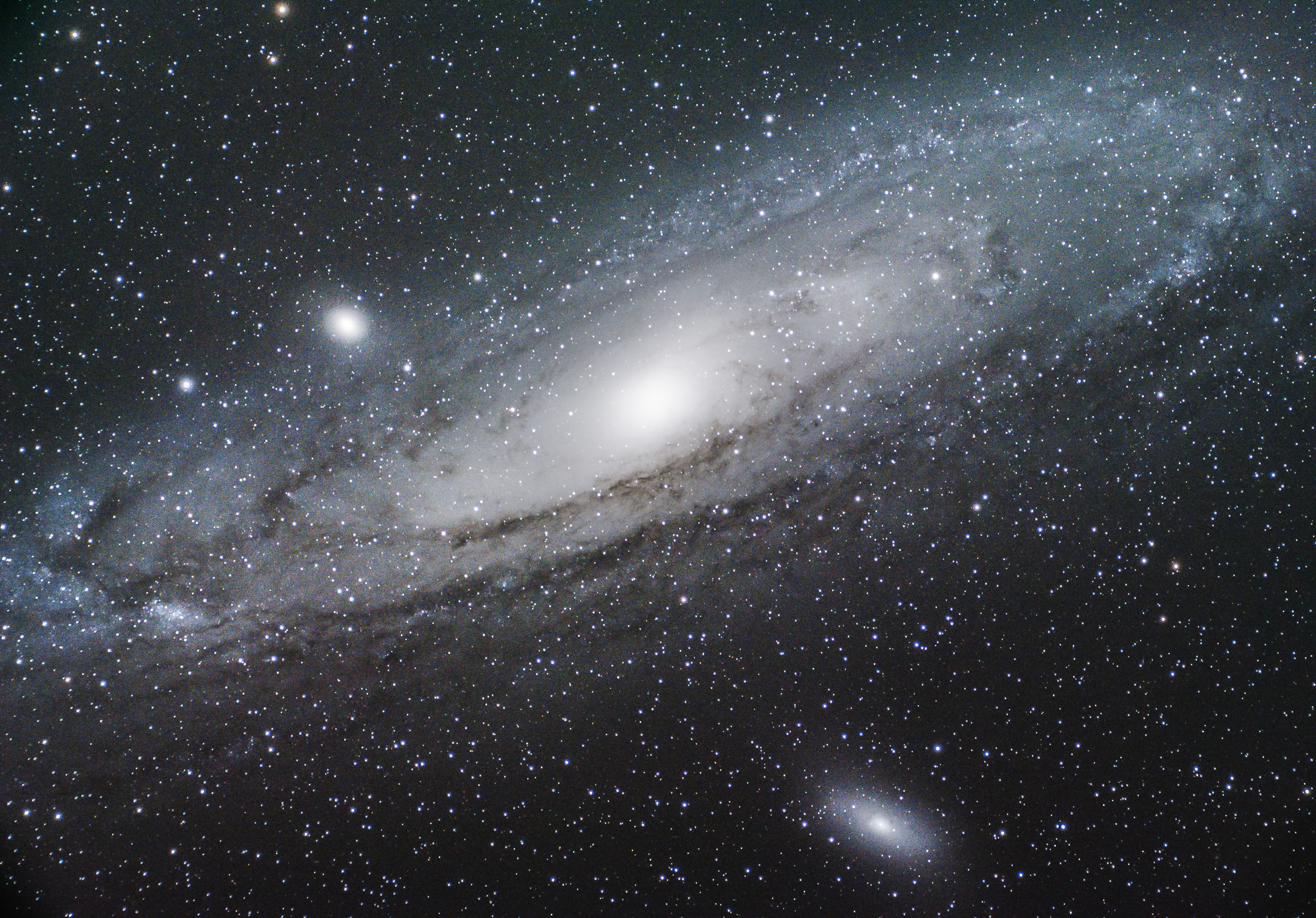
45x30s, Astro-Physics 127mm f/8, Nikon D750, ISO 1600, preprocessed and stacked in Regim, developed in Photoshop and Lightroom.
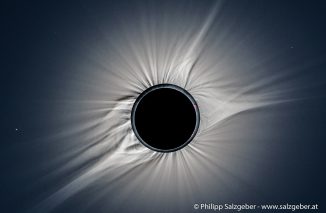
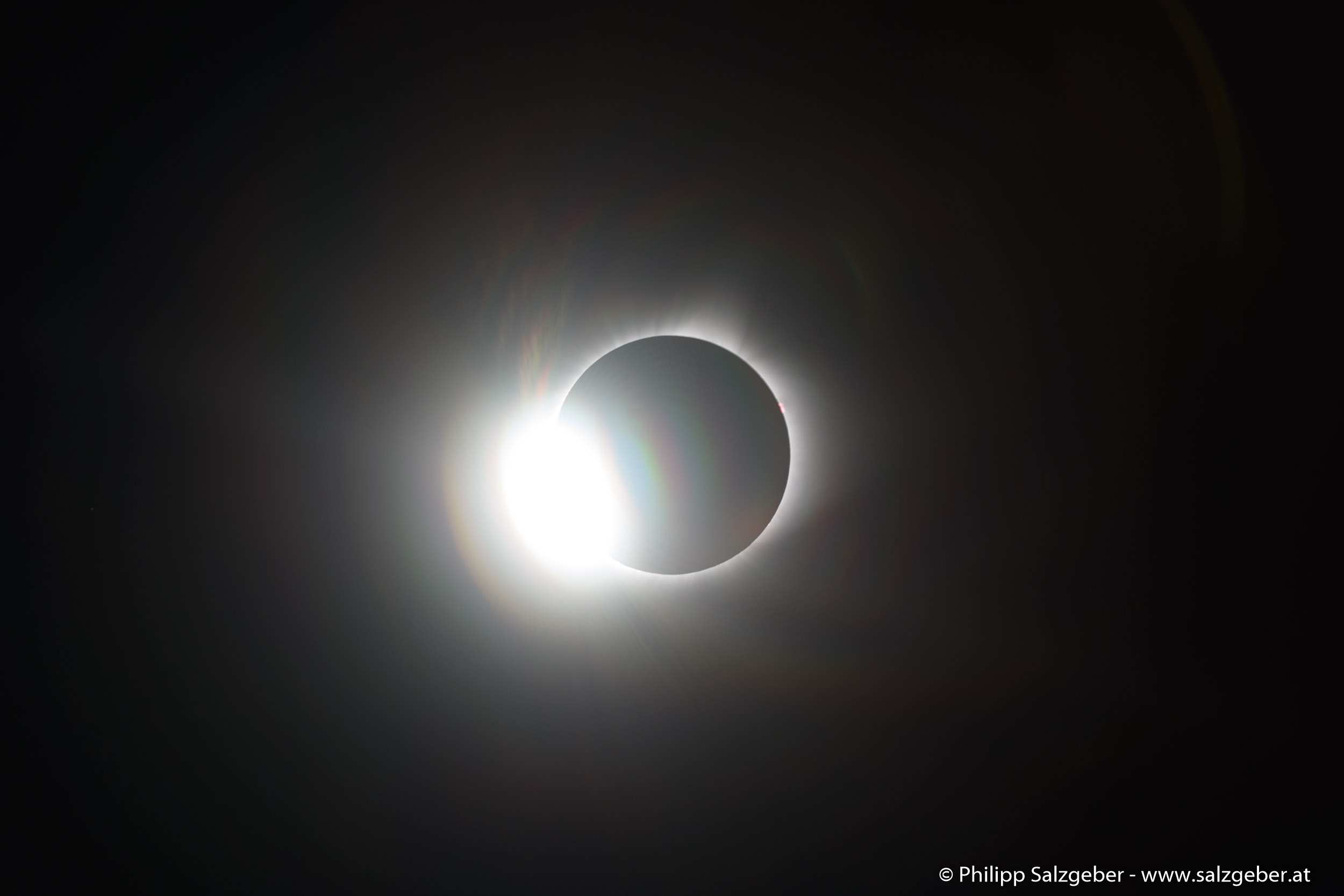
2nd Contact – Diamond Ring, Nikon D750, 1/160s, f/8.0, ISO 400, 600mm (300mm f/4 PF + TC-20E III)