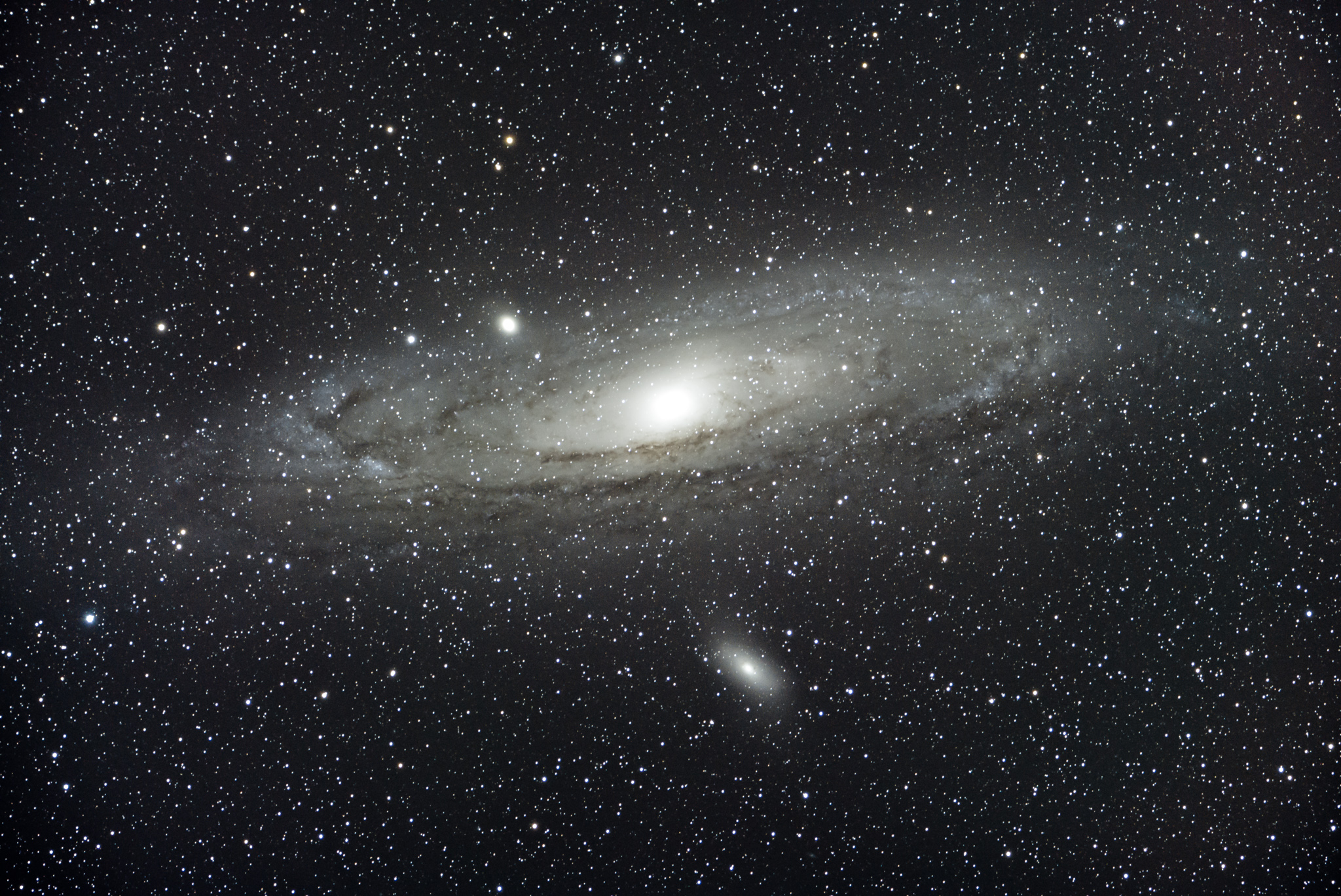
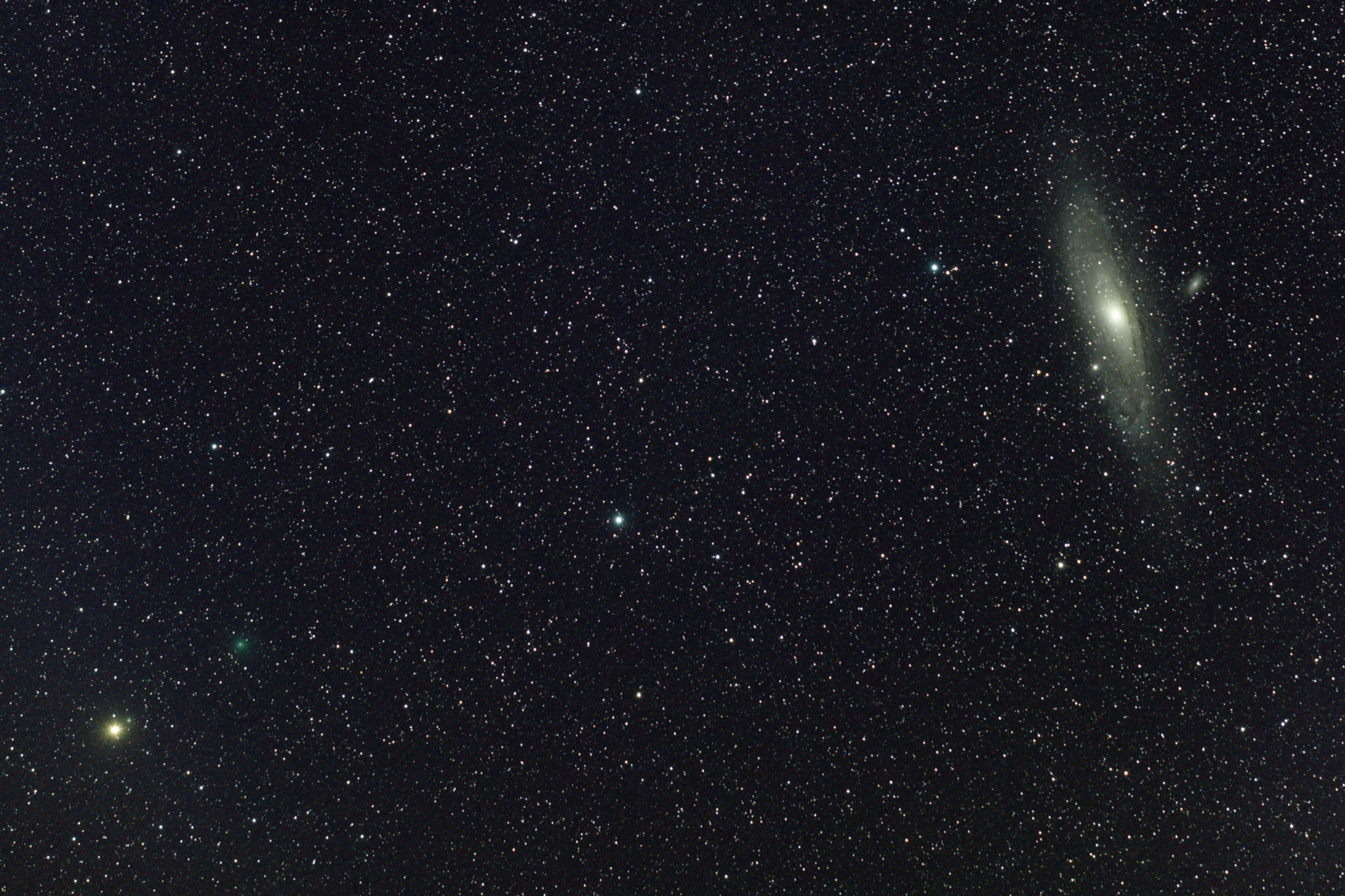
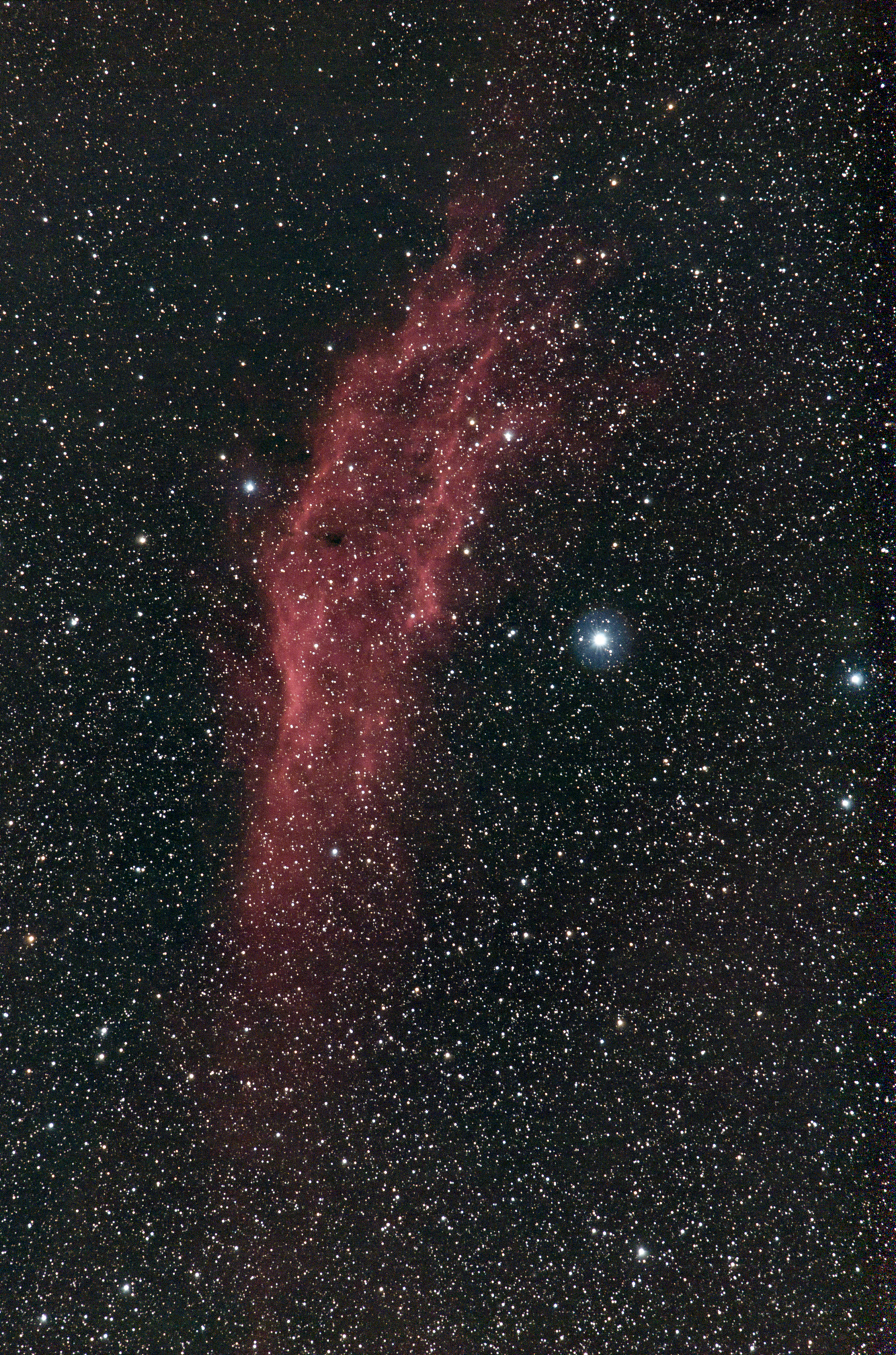
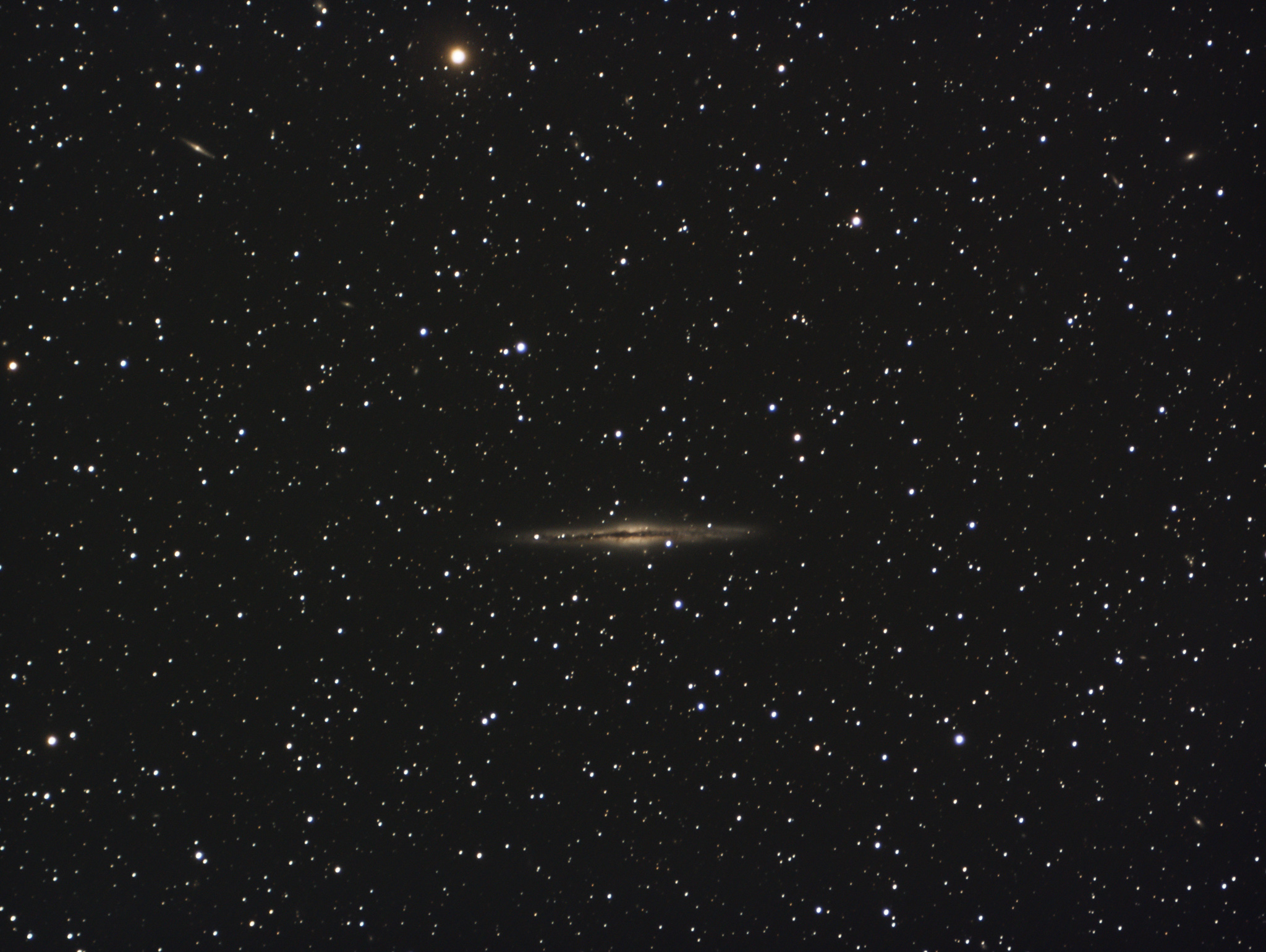
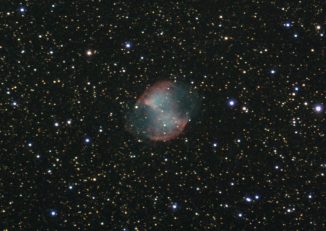
Today I used a break in the clouds to test how the astro-modified Nikon D7000 works with a h-alpha Filter. As the weather was very unstable, I didn’t set up the laptop for guiding, so some images were unusable due to trailing and passing clouds and full cloud cover at the end of the exposure resulted in oly 83x30s unguided exposures. Which way too short, but I am happy with the result under these circumstances.
Category Archives: astrophotography
Two Nights, Two Scopes, Two Targets
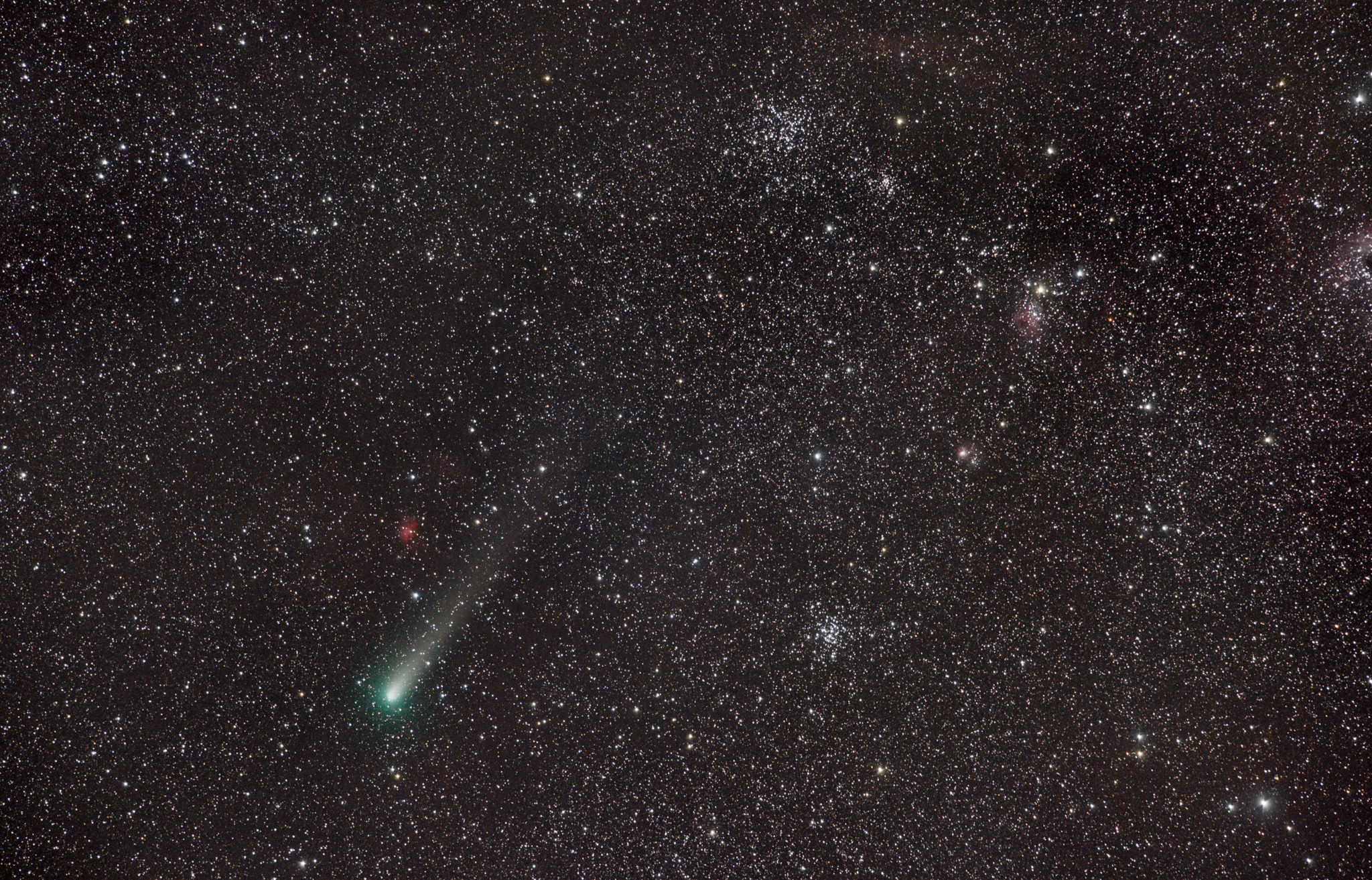
Comet 64P/Swift-Gehrels
I was actually heading to bed when I noticed, that the sky cleared up enough to try to photograph Comet 64P/Swift-Gehrels.
As I wanted to create an image that included the Andromeda Galaxy, I used the 70-200 zoom and set it at about 130mm.
Full spectrum modification of a Nikon D7000 – Part II
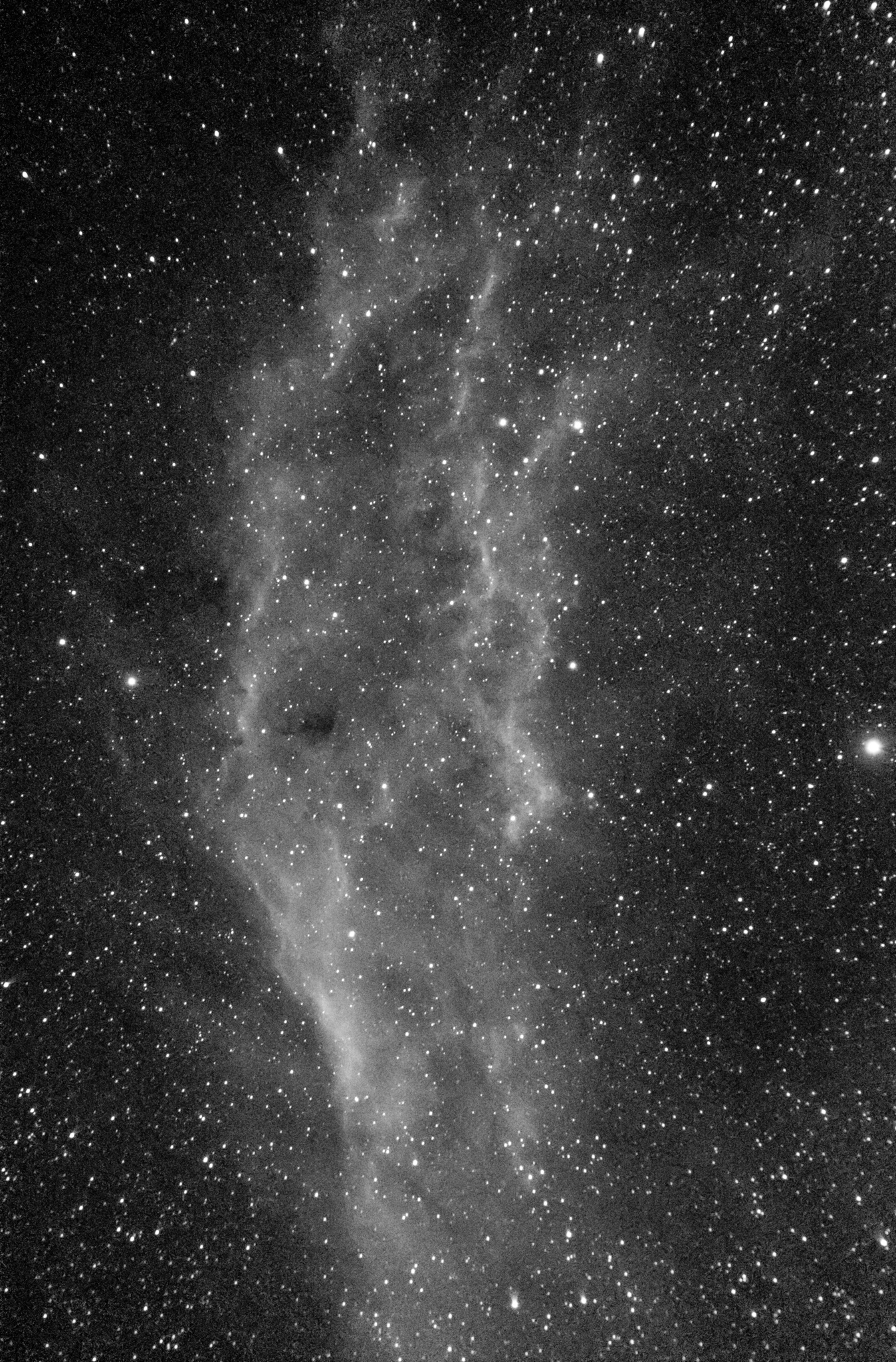
On November 5th I had the opportunity to do another test, this time using the 300mm lens, I also used the California Nebula as the target.

NGC1499, the California Nebula, 192x30s (1h 21min), Nikon D7000a, AF-S NIKKOR 300 mm 1:4E PF ED VR, calibrated in Regim, processed in Fitswork, Photoshop and Lightroom. Mount: Vixen Polarie.
The California nebula is hydrogen gas which is irradiated by the intense UV radiaton from Xi Persei, the bright star near the center of the image. It is about 1250 light years distant and is one of the intrinsically brightest and hottest stars visible to the unaided eye. It weighs in at about 40 solar masses. The surface temperature is a whopping 35000 Kelvin.
NGC891
NGC 891 is a beautiful spiral galaxy which is seen perpendicular to it’s rotational axis, so we see it edge on.
It is located in Andromeda, so there are many foreground stars.
I have seen it in telescopes as small as 15cm aperture, in my 250mm the dust lane becomes visible, but in a larger scope, like the 40cm I recently observed with, it is a really beautiful sight. But of course not as detailed as in this image.
Testing the QHY163c camera
The Vorarlberger Amateur Astronomen acquired a QHY163c cooled CMOS camera. It is based on a Panasonic Micro-Four-Thirds (m43) sensor, but has added cooling and an astronomical suitable ir-cut filter. Read More
Comet 21P/Giacobini Zinner at the Lange Nacht der Sterne
Here are some first results of this weekends “Lange Nacht der Sterne” starparty.
Perseids 2018
Me and my family spend the night of August 11th on the Gamserrugg mountain (2075m, 6811ft elevation) in Switzerland, where a friend works as the shepherd during summer. Read More
Lenses and constellations
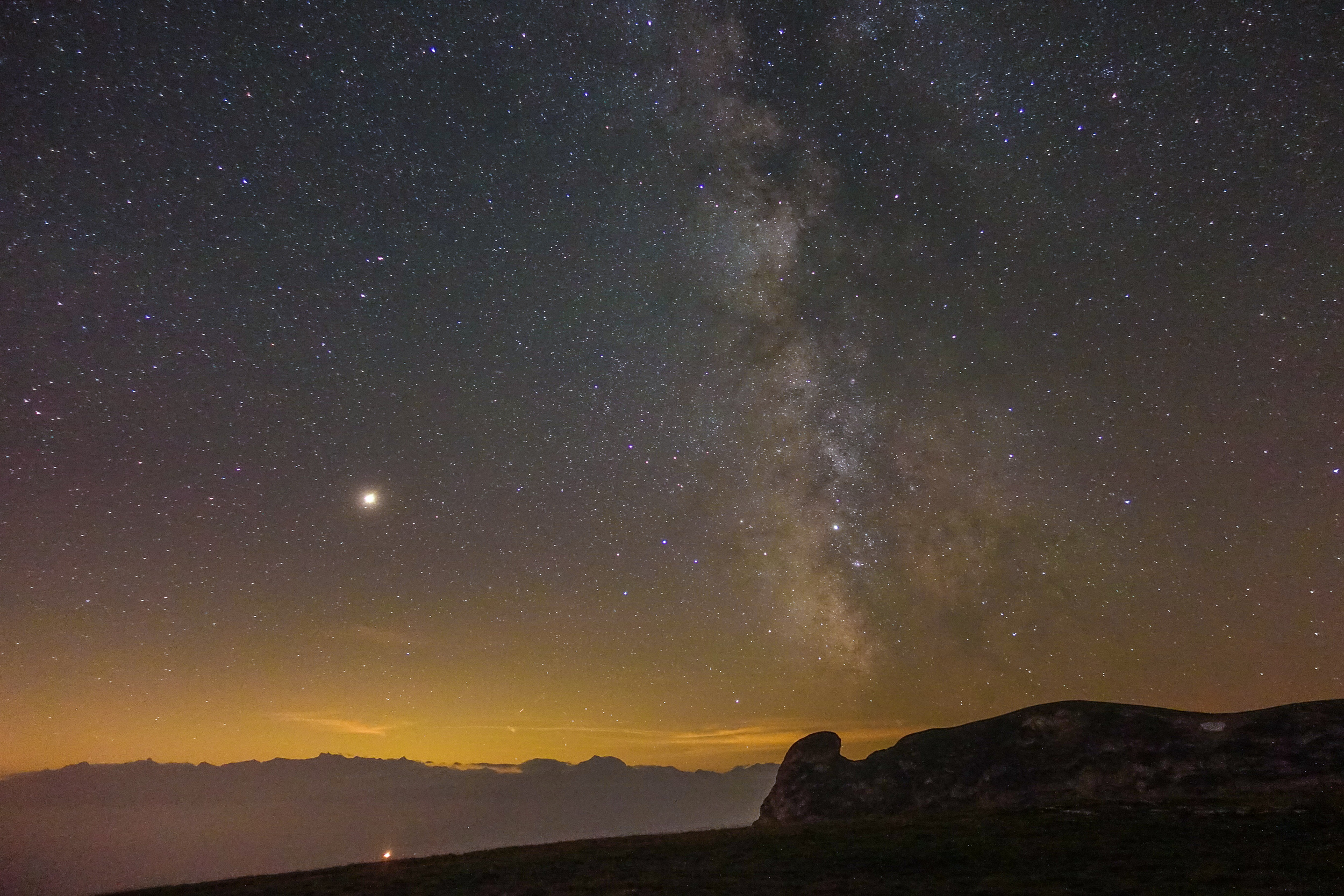
Modern lenses provide pinpoint stars in nighsky photos, But this reduces all stars to small points, constellations are almost unrecognizable.
This is an image which is a part of a timelapse sequence taken with a Sony #RX100 IV camera. Mars, Saturn and the Milky Way are clearly visible.
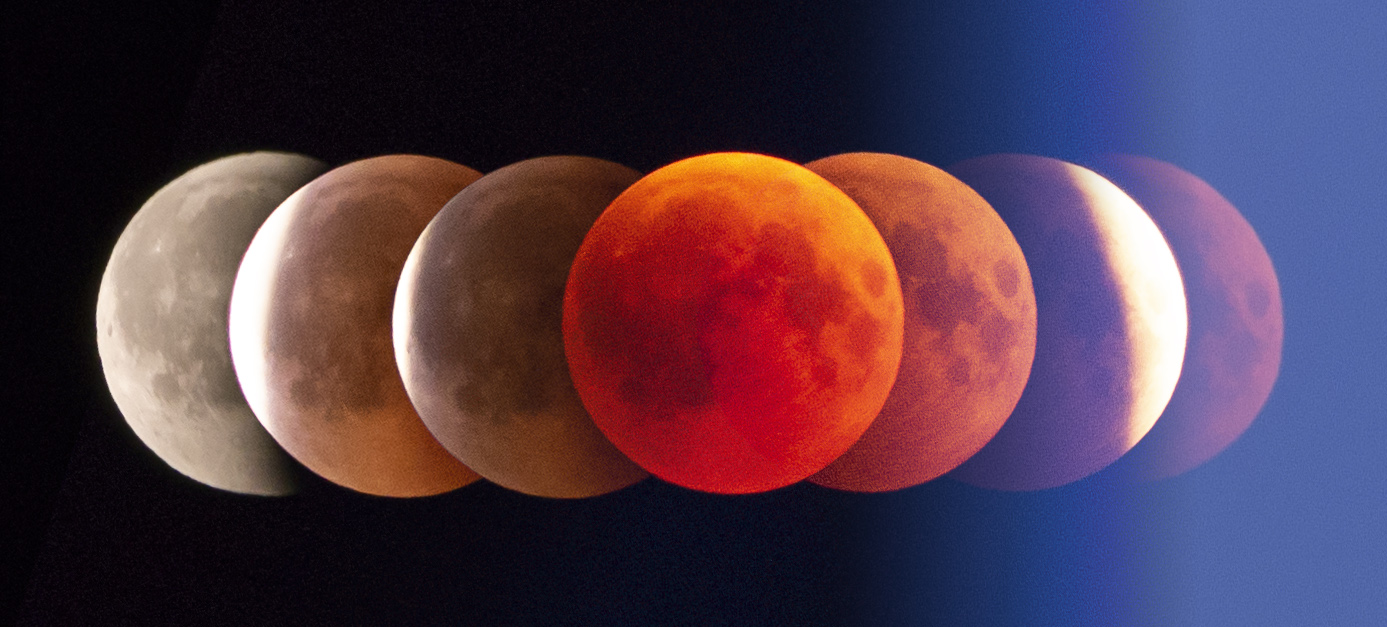
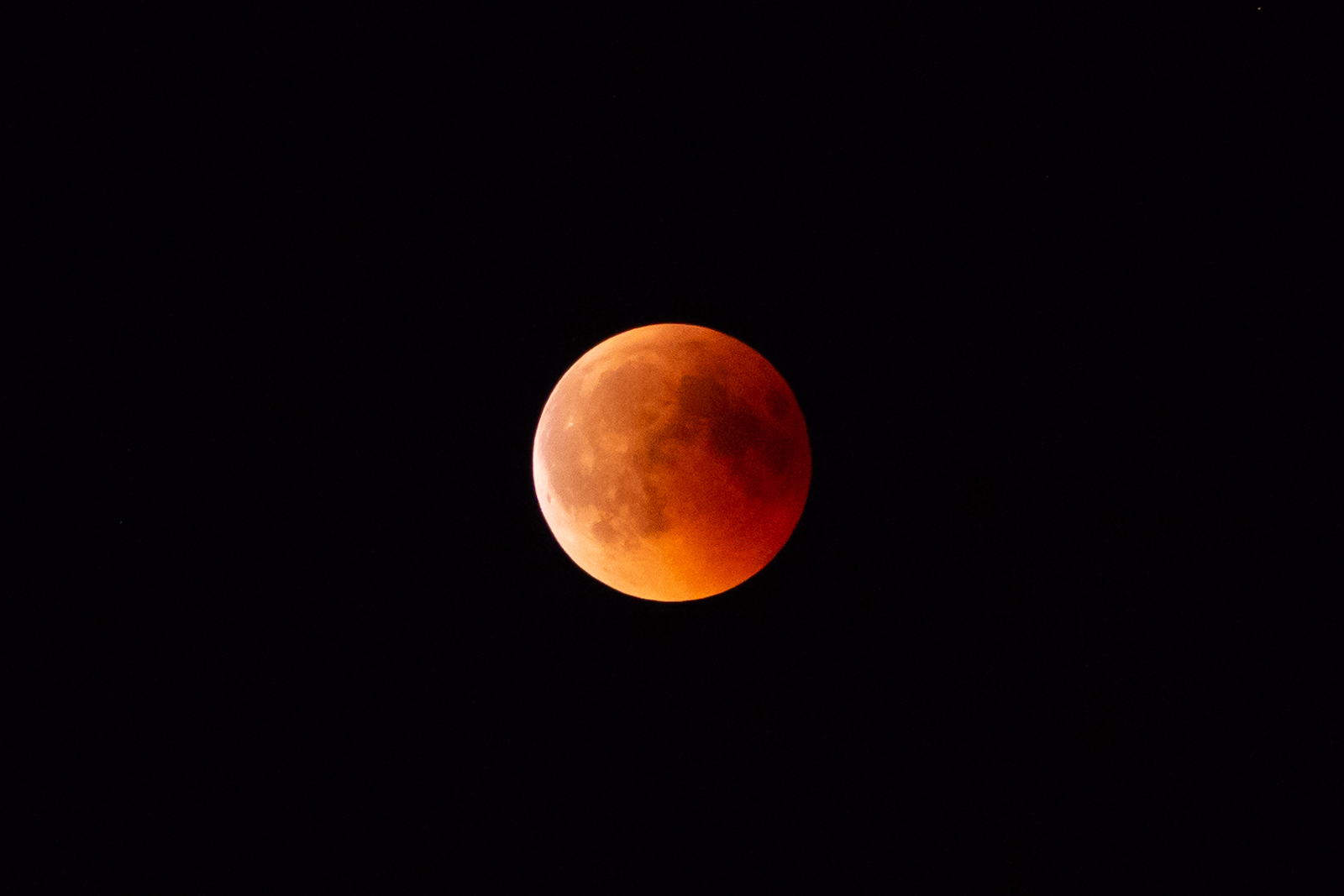
Lunar Eclipse from Corsica
The longest lunar eclipse of the 21st century took place during our vacation in Corsica, here are some shots taken from the beach:
Since this was a camping vacation I only had minimal gear with me, a Sony RX100 IV compact camera, and my wife’s Olympus E-PL5 with the kit zoom lenses. The 40-150mm is equivalent to 300mm on full-frame cameras, so the close-ups are cropped heavily.