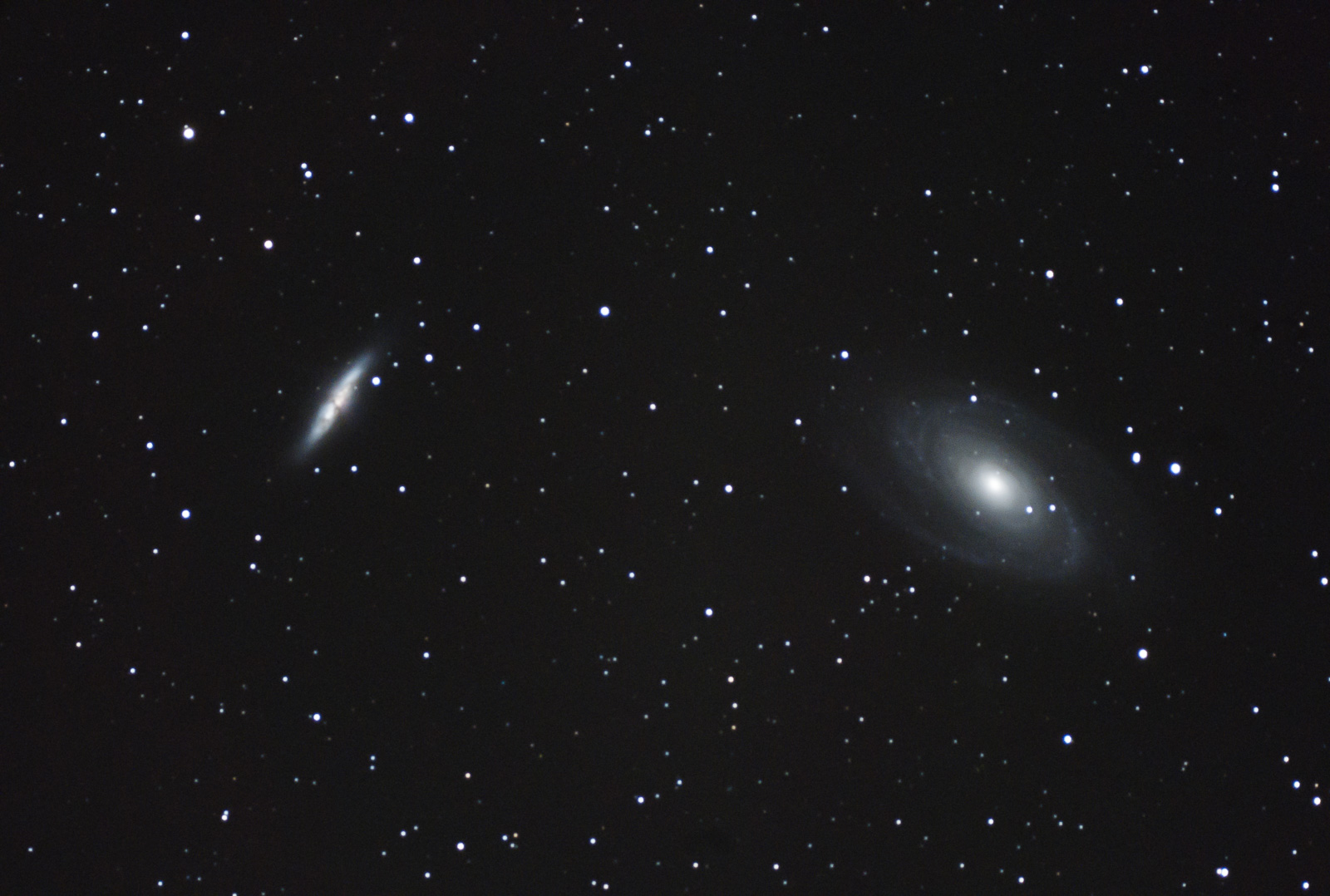
M16 – The pillars of creation
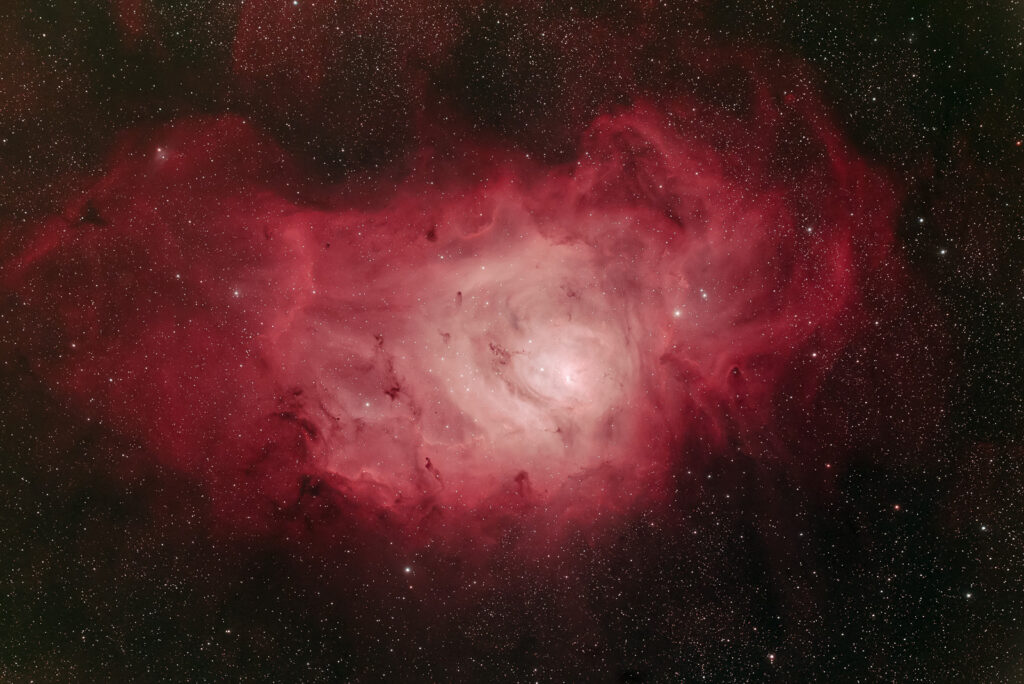
A short exposure of the lagoon nebula in the constellation Sagittarius.

Since about 30 years ago, when an astronomy club colleague showed me M104 the sombrero galaxy in a 20×60 binocular it was one of my favourite deep sky objects.
A night after the great Aurora Display of 2024 I joined a friend who was imaging the Leo triplet, and had a go at M104 using the Starfire 127mm on the G-11 mount. We had a fun evening, saw some faint meteors, watched the milky way slowly rising.
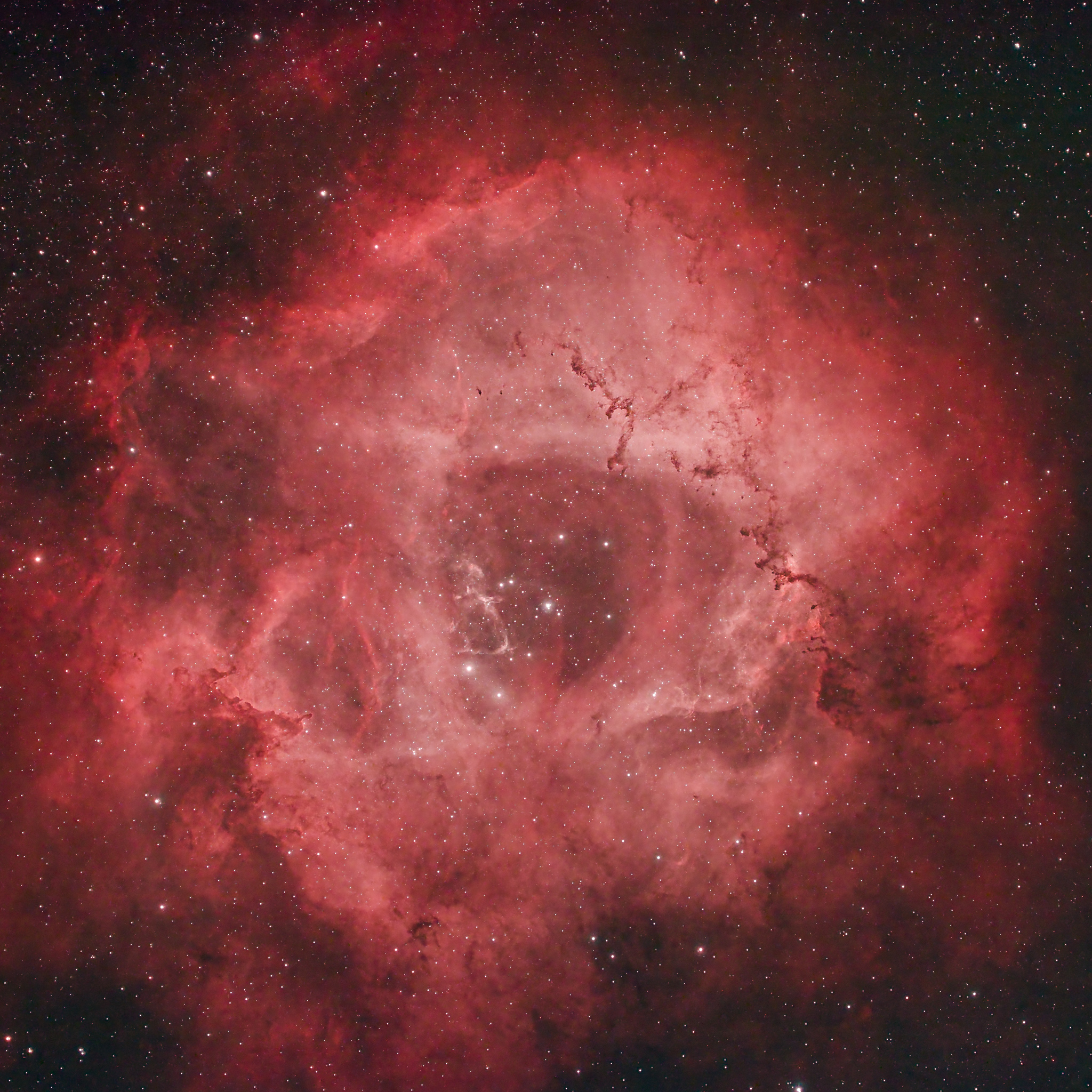
I chose the Rosette nebula again as my target of choice when I wanted to test if I can improve on the image quality when using the 0,7x reducer.
The Rosette nebula is a large and relatively bright emission nebula in the constellation Monoceros. Various parts of the nebula have separate NGC numbers and the embedded star cluster itself is NGC2244
This wider view was taken with the Takahashi FS-60CB and shows the surrounding area of the sky.
Later I discovered that the reducer only provides a 10% reduction in focal length, while introducing quite a bit of vignetting.
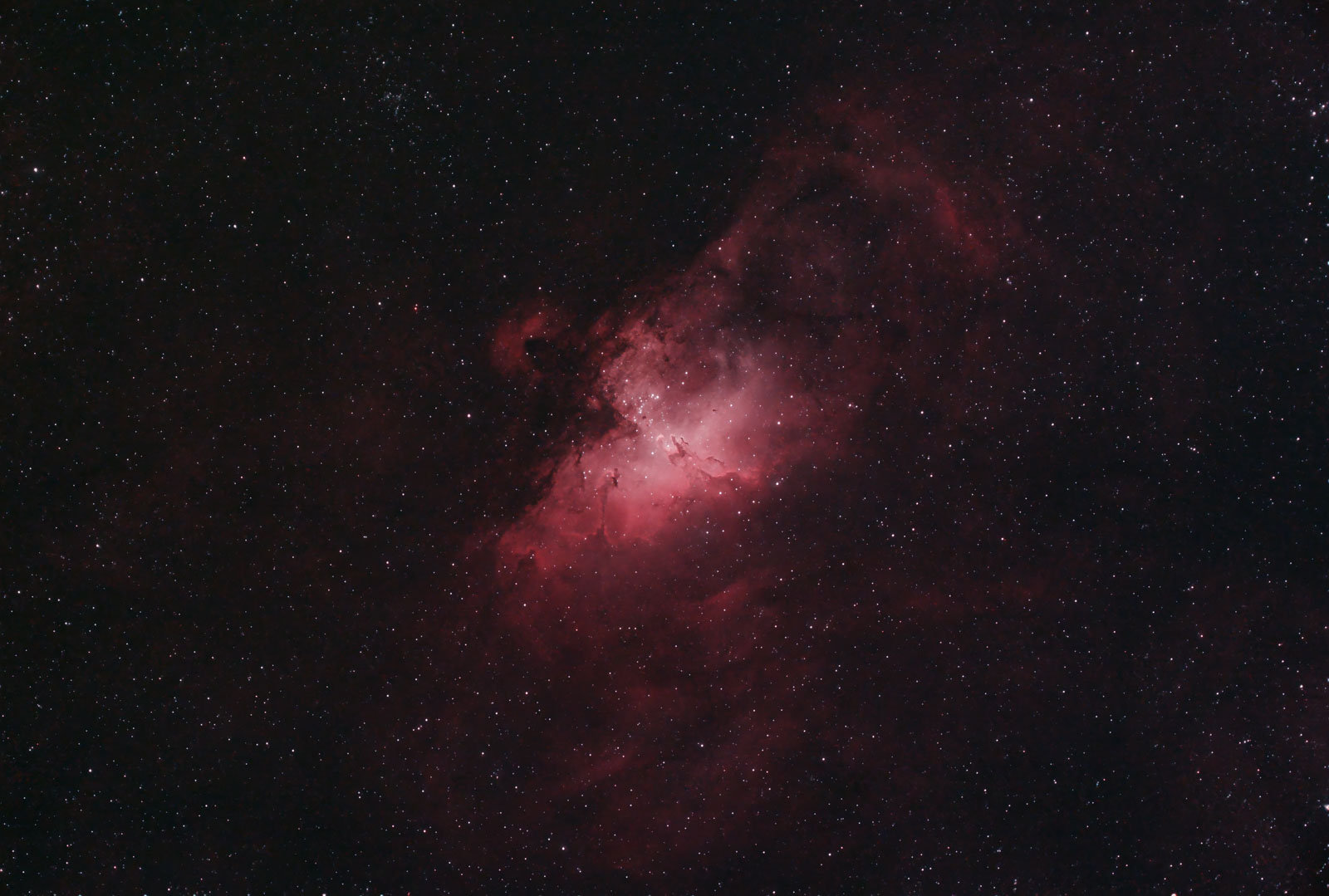
M16 has become famous with the famous image of the Hubble telescope showing the pillars of creation. They are also visible in the center of the image below.
This was a first, quick test with the 0,75x reducer (27TVPH) – but I think focus was not good, so my judgement about the quality of the image the focuser delivers is not final yet.
In Autumn the Andromeda galaxy is conveniently placed in the darkes part of the sky for my home, the eastern sky.
Due to the vibration prone location of my telescope on the top of our house, I had to throw away 2/3rds of the individual exposures due to trailed stars, so I ended up with only 22,5 minutes of data. Another possibility is, that the guiding didn’t work properly, calibration was suspiciously short.
Anyways, here is the Andromeda galaxy at 1016mm focal length, Nikon D750, 45x30s, ISO 1600, Astro-Physics 127mm f/8, Meade LXD 650 mount.
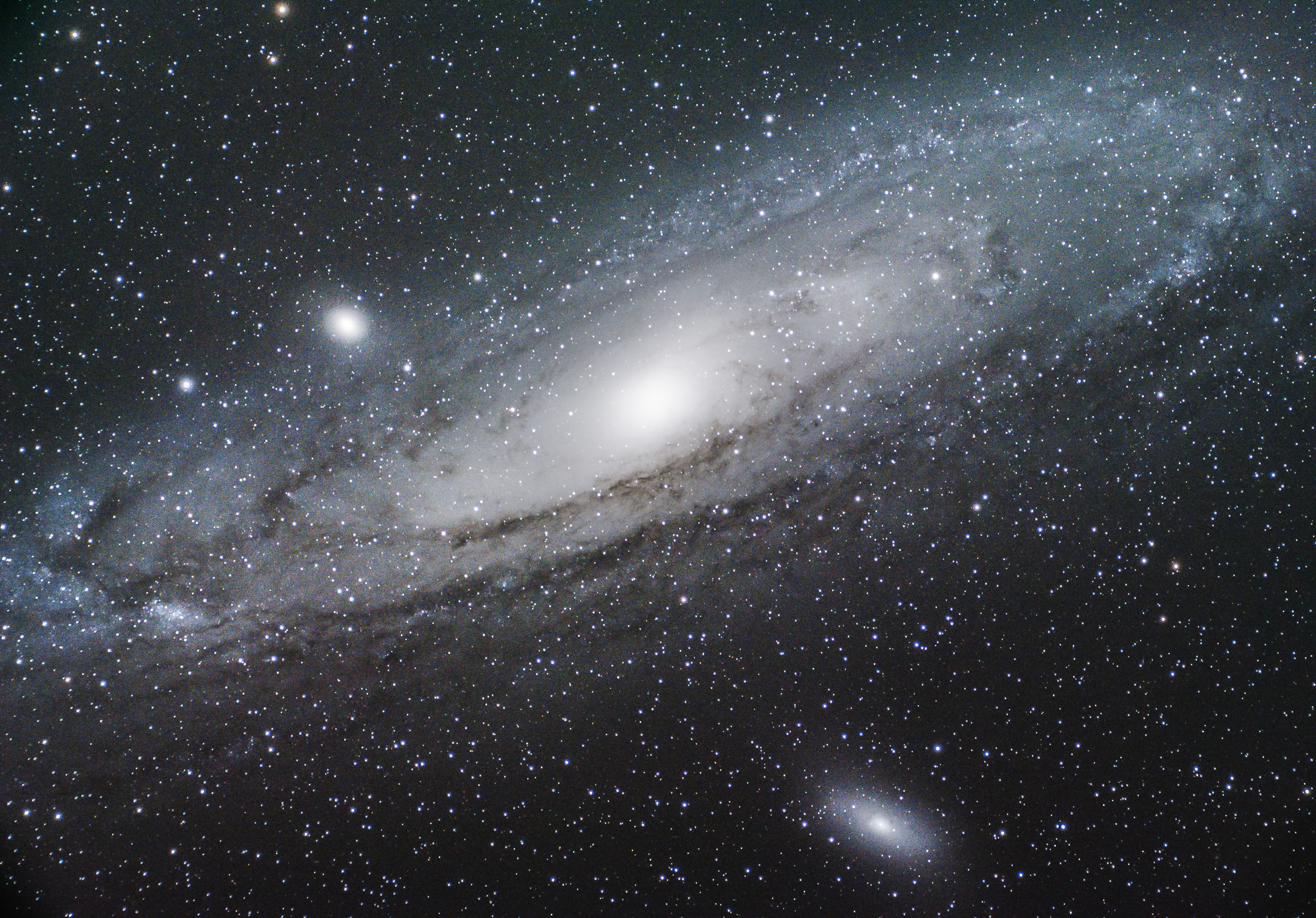
45x30s, Astro-Physics 127mm f/8, Nikon D750, ISO 1600, preprocessed and stacked in Regim, developed in Photoshop and Lightroom.
Two weeks before the moon will eclipse the sun, the moon was partially eclipsed by the Earth’s shadow
I had to turn around, when the road to my observing location was blocked, then I rushed to another spot, to find clouds on the horizon blocking the view for quite a while. But finally the still eclipsed moon emerged from the clouds and I was able to take some quick shots.
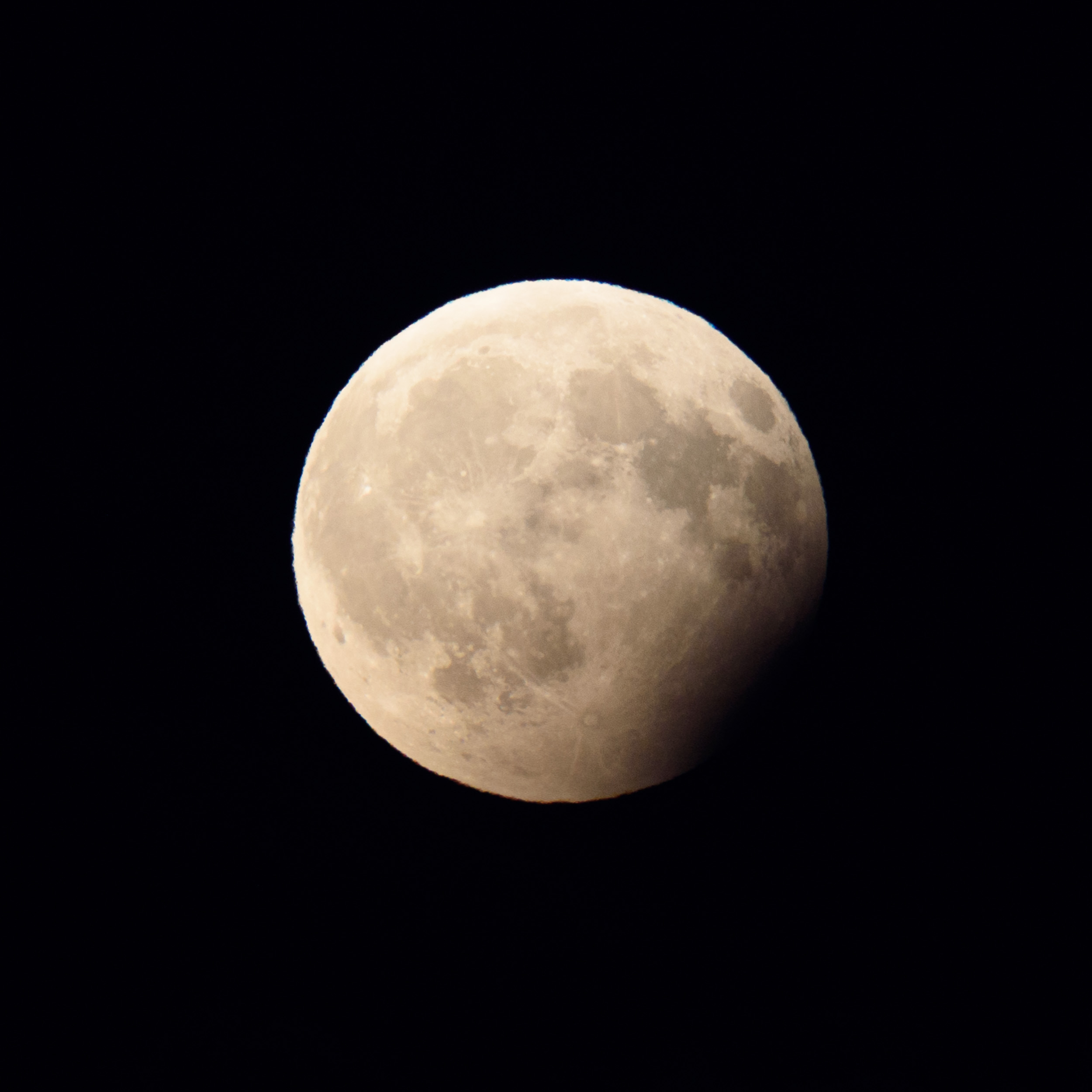
I used my 80mm refractor and a 300mm lens for the images.
Read More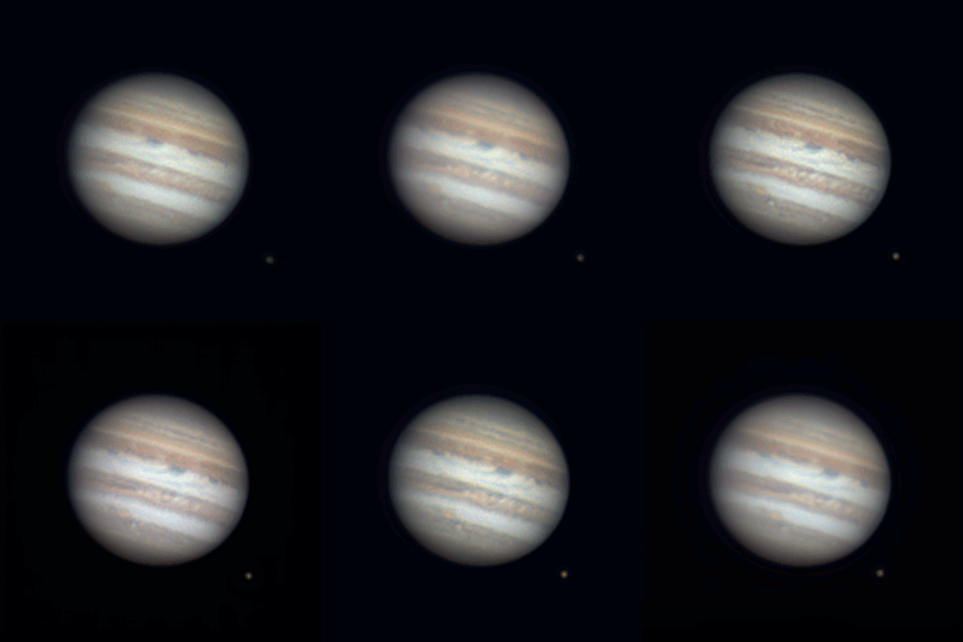
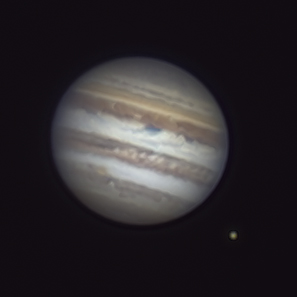
Software used: Autostakkert 3.0, Registax, Fitswork. This version is a bit softer, shows much less artifacts but still more detail I think.
I also updated the animation with reprocessed frames Read More
This evening I did a quick test under the stars to see, how iAstroHub 3.0 works with my setup.
Apparently it works quite well, though I need to test with longer exposures.
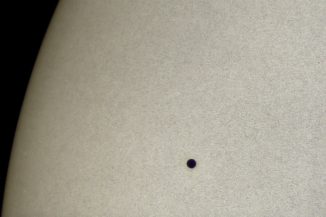
Today the tiny disc of mercury crossed in front of the sun. The weather didn’t cooperate fully, and I had to switch mounts as the Meade randomly stopped tracking in RA, and the WiFi router for the roof didn’t work as expected and tested… but I was still able to get some decent images… Read More